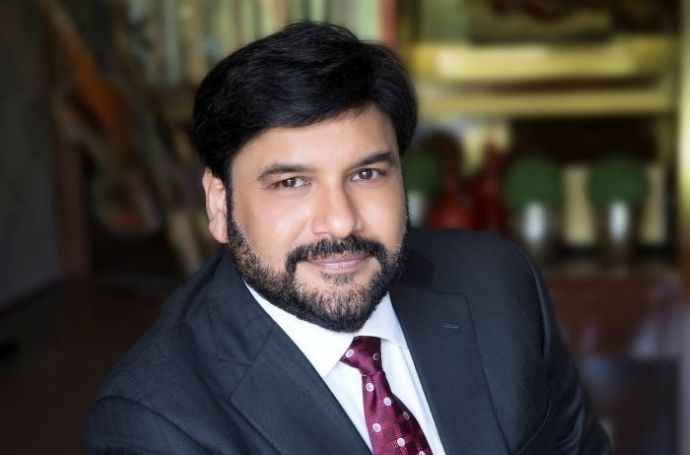


When Oxford-educated Bilawal Bhutto Zardari—chairman of the Pakistan Peoples Party (PPP) and former foreign minister—resorted to jihadi rhetoric during a rally over Indus Water Treaty tensions with India, it sent shockwaves across the political and diplomatic landscape. That a polished, Western-educated politician would invoke such language revealed just how deeply radicalization has seeped into the fabric of Pakistani society. It was more than a rhetorical misstep—it was a symptom of a long-standing, systemic malaise where religious extremism has been normalized and even politicized.
Islamic radicalization has had profound implications for various sectors in Pakistan, and one of the most critically affected is the education system. Over the past few decades, ideological extremism, often fueled by political agendas and religious militancy, has reshaped curricula, affected access to education, and contributed to a culture of intolerance and fear in academic spaces.
The roots of this phenomenon lie not merely in street-level radicalization, but in the more insidious strategies adopted by Pakistan’s power institutions. For decades, the country’s military and political elites have leveraged religious sentiment as a tool to consolidate authority and manipulate public discourse. By portraying regional tensions—particularly with India—as existential threats to Islam and Pakistan’s sovereignty, these institutions have used nationalism wrapped in religious rhetoric to distract, control, and indoctrinate.
This is far from a recent development. Since the 1970s, and especially under General Zia-ul-Haq’s Islamization drive in the 1980s, Pakistan’s educational system has undergone a transformation that institutionalized hate and distortion. History textbooks have been tailored to promote a mono-religious identity, glorify jihad, and embed hostility toward non-Muslims—particularly Hindus and Jews. Critical thinking and historical accuracy have been replaced with ideological narratives designed to cultivate unquestioning loyalty and intolerance.
As a result, multiple generations have been raised on a curriculum that fosters fear, superiority complexes, and alienation from the broader, pluralistic world. The consequences are stark. Radicalized individuals, fueled by selective readings of history and religion, have contributed not only to domestic extremism but also to transnational terrorism. Pakistan’s challenges have become the world’s risks, as exported radicalism manifests in global jihadist networks and violent ideologies.
The education sector, once a potential beacon of reform and progress, has been one of the most critically damaged by this trajectory. Access to quality, secular education is uneven, and in many regions, nonexistent. In its place, madrassas—many of them unregulated—have filled the void, often with curricula steeped in ultra-conservative teachings. Even in public schools and universities, an atmosphere of fear and self-censorship prevails, where questioning religious or political dogma can lead to accusations of blasphemy—a charge that carries lethal consequences in Pakistan.
The culture of intolerance that permeates academic spaces discourages diversity of thought and has stifled intellectual growth. Teachers are intimidated, students are radicalized, and knowledge is subordinated to ideology. Rather than being a tool for empowerment and critical engagement, education has been weaponized in service of a narrow, exclusionary vision.
The international community cannot afford to ignore these dynamics. While Pakistan grapples with internal contradictions and the fallout of decades-long policy failures, its radicalization problem is no longer confined within its borders. A comprehensive strategy—one that promotes curriculum reform, strengthens civil society, and supports moderate voices—is urgently needed to reverse the course. Equally important is holding the country’s institutions accountable for their role in perpetuating extremism under the guise of nationalism and religion.
Bilawal Bhutto Zardari’s incendiary rhetoric may have been politically expedient, but it serves as a grim reminder that radicalization in Pakistan is not a fringe issue—it is mainstream. And unless confronted at its roots, especially in the education system, the cycle of extremism and its global repercussions will continue unabated.
Islamic radicalization has deeply affected the Pakistani education system, eroding the foundations of tolerance, academic freedom, and progress. Addressing these challenges requires a multi-pronged approach: revising curricula, regulating religious schools, protecting educators and students, and promoting a culture of critical inquiry. Only by confronting these issues head-on can Pakistan hope to rebuild an education system that empowers all its citizens, regardless of faith or background.