
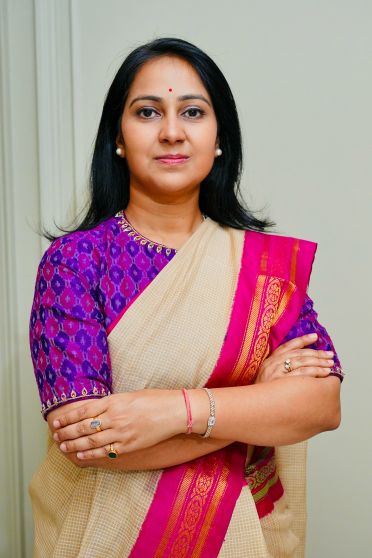
Political literacy—defined as the ability to critically analyze manifestos, evaluate policy impacts, and identify credible information—must advance alongside economic and digital literacy. Building such literacy is a collective responsibility, requiring coordinated efforts from education, media, civil society, and technology writes Priyal Bhardwaj
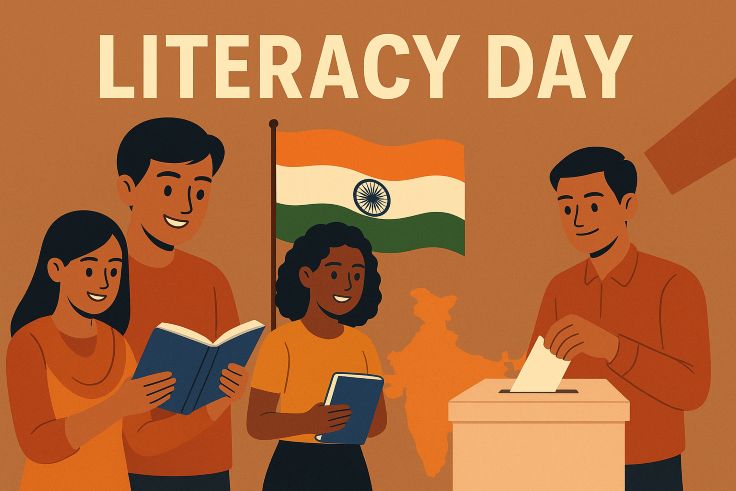
 India, as the world’s largest democracy, conducts a remarkable political exercise every five years to elect the Parliament and state legislatures. With the voting age set at 18, millions of young first-time voters enter the electorate during each election cycle. Naturally, their participation demonstrates enthusiasm for democratic engagement. However, their political preparedness often remains inadequate, which can have long-term consequences on their voting behavior.
Contemporary governance in India encompasses complex domains such as tax reforms, renewable energy transitions, digital data rights, and global trade negotiations. To make informed decisions, citizens must be equipped with the tools to evaluate such policies critically. Without political literacy, democracy remains vulnerable to misinformation, populist rhetoric, and short-term emotional appeals.
The rise of digital platforms has amplified both opportunities and challenges. With 750 million internet users and over 500 million smartphone users, citizens today have unprecedented access to political information. Yet this environment is also rife with fake news, echo chambers, and algorithm-driven polarization. A study by Banaji and Bhat (2019) on WhatsApp misinformation in India demonstrated how viral half-truths contributed to mob violence, underscoring the urgent need for citizens to develop evaluative capacities.
Political literacy, therefore, must not be regarded as a luxury but as an essential safeguard of democracy. It ensures that voting transcends ritualistic participation and becomes a responsible, informed exercise grounded in critical judgment.
India’s democratic challenge is not the absence of voters but the absence of adequately informed voters. To align democratic practice with the aspirations of its citizens, political literacy must advance alongside economic and digital literacy. Although Indian democracy has demonstrated resilience over the past seven decades—with rising voter turnout, enhanced participation of women, and the integrity of electoral institutions earning international recognition—the quality of participation must now be prioritized.
A persistent perception about electoral behavior in India is that decisions are often driven by identity markers, slogans, or immediate grievances rather than an informed understanding of governance, policy frameworks, or accountability mechanisms. Casting a vote without sufficient literacy is comparable to endorsing a binding contract without reviewing its terms and conditions. Democracy cannot be measured solely by scale; its strength must also be assessed by the quality of political literacy, which ensures that voting is a responsible act grounded in critical reflection.
Political awareness should not be perceived as adversarial to governments. On the contrary, it reinforces democratic legitimacy. A politically literate electorate is capable of rewarding genuine achievements while demanding accountability for deficiencies. The BJP’s successive electoral victories underscore this dynamic, illustrating how informed participation can produce decisive mandates. A more politically conscious electorate would further strengthen the credibility and sustainability of such outcomes.
Building political literacy is, therefore, a collective responsibility. It is central to bridging the gap between numerical participation and substantive democratic engagement. Political literacy transforms citizens from passive voters into active agents of governance, capable of discerning policies and holding institutions accountable. When citizens recognize the full significance of their vote, democracy evolves beyond scale and resilience, achieving the status of a system grounded in wisdom and collective responsibility. Importantly, the advancement of political literacy cannot be the responsibility of a single institution; it requires a multi-layered approach encompassing education, media, civil society, and technology.
- Education: Curricula in schools and universities must transcend rote learning and incorporate civic engagement. Activities such as mock parliaments, debates, and the study of party manifestos can cultivate critical thinking and informed citizenship (NCERT, 2020).
- Media: Media organizations must prioritize substantive reporting on governance and policy outcomes rather than sensationalist electoral spectacles. Rigorous fact-checking and investigative journalism are vital to counter misinformation (Thussu, 2019).
- Civil Society: Non-governmental organizations and grassroots movements can strengthen awareness through workshops that simplify governance processes, ranging from budget analysis to the effective use of the Right to Information (RTI) Act (Jenkins & Goetz, 1999).
- Technology: Digital platforms can expand access to political knowledge by employing gamified tools, regional language applications, and simplified explanatory content (UNESCO, 2018).
In conclusion, when citizens recognize the full significance of their vote, democracy evolves beyond scale and resilience, achieving the status of a system grounded in wisdom and collective responsibility. Political literacy goes beyond remembering polling dates or identifying party symbols. It requires the ability to read manifestos critically and to understand how policies affect everyday life. Only through such literacy can India’s democracy fulfill its promise of being not just the largest in the world, but also one of the most mature and accountable.
Priyal Bhardwaj is General Secretary, BJP Women’s Wing, Delhi and Founder of NGO Sangini Saheli