
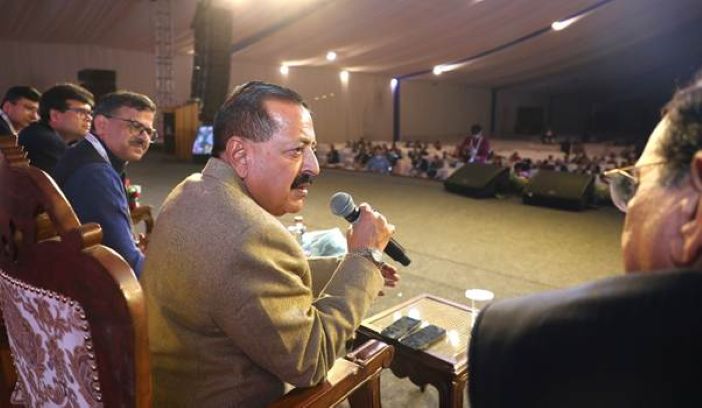
Speaking at the panel discussion “Clinician–Scientist Interaction on Obesity” during the India International Science Festival (IISF) in Panchkula, Haryana on Dec 8, Union Minister of State for Science & Technology, Dr. Jitendra Singh said: “Obesity has emerged as a public health challenge in India, and is not a mere cosmetic issue. The challenge needs to be addressed with scientific precision and policy discipline.”
Dr. Jitendra Singh noted that Indian society has historically viewed obesity as a cosmetic issue rather than a disease, which has delayed scientific conversations around it. “For decades, our medical conferences discussed diabetes and metabolic disorders, but never obesity. It is only in the last 15 years that we have even begun treating it as a subject of serious medical relevance,” he observed.
The minister highlighted India’s unique phenotype, especially the higher prevalence of central or visceral obesity in Oriental populations. “For Indians, the waistline tells a more important story than the weighing scale,” he said, stressing that visceral fat is an independent risk factor even when overall body weight appears normal.
Addressing the widespread and fashionable adoption of GLP-based drugs, the Minister urged caution with judicious use and emphasised that sometimes long-term effects become evident several years later. He recalled past public-health misjudgements, such as the unregulated shift to refined oils in the 1970s and 80s, which later revealed unfavourable consequences. True clinical inference may come from observing outcomes over decades,” he pointed out.
Dr. Jitendra Singh also referred to emerging concerns such as sarcopenia and “Ozempic face” linked to rapid or drug-induced weight loss, stressing that the full spectrum of physiological impact is still not fully understood.
A major portion of the Minister’s address focused on the threat posed by misinformation. He warned that unqualified practitioners and self-styled dietitians are worsening India’s metabolic crisis. “The challenge in India is not lack of awareness, but the explosive growth of disinformation. Every colony has a dietitian, but no system to verify their qualifications. Unchecked advice and untested formulas can do more harm than obesity itself,” he said, urging policymakers to design mechanisms that safeguard patients from misleading interventions.
He also pointed to the expanding range of metabolic complications in India. “Earlier every third OPD patient had undiagnosed diabetes; today every third patient has fatty liver. The spectrum is widening, and we need a far more scientific and regulated ecosystem to handle it”.
Held in the presence of leading experts from clinical medicine, biomedical research and public policy, the session brought together a multidisciplinary perspective on India’s rising metabolic health burden. The Minister addressed a packed audience at IISF, emphasising how societal behaviour, market forces, and misinformation have complicated India’s obesity landscape.
The dais featured leading experts from India’s scientific and medical community, including Dr. Ashwani Pareek, Executive Director of NABI; Dr. Vinod Kumar Paul and Dr V.K. Saraswat, Members NITI Aayog; Prof. Ullas Kolthur, Director of CDFD; Dr. Ganesan Karthikeyan, Executive Director of THSTI; and senior endocrinologists Dr. Sanjay Bhadada and Dr. Sachin Mittal.
The session ended with a call for deeper collaboration between clinicians, researchers, policymakers, and the public to address India’s fast-evolving metabolic health challenge.