
It is often said that we learn more from our failures. Yet, the fear of failure remains overwhelming—both for individuals and institutions. The idea of normalizing failure may sound counterintuitive, even reckless. But when grounded in science, it becomes a powerful and intelligent way to ensure that we do not fail when it matters most. This is the essence of “Productive Failure,” a concept developed by Singapore-based learning scientist Prof. (Dr.) Manu Kapur.
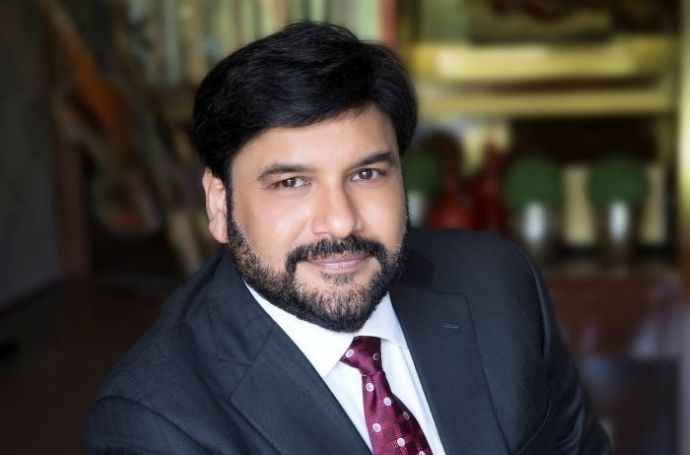
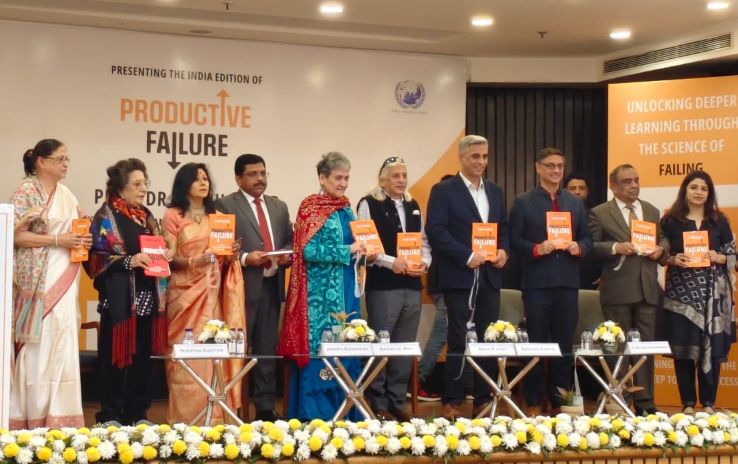
Prof. Kapur is the Director of the Singapore-ETH Centre and Professor of Learning Sciences and Higher Education at ETH Zurich, Switzerland, where he also leads The Future Learning Initiative (FLI). Deeply connected to India by roots and long-standing engagement, Prof. Kapur released the Indian edition of his book Productive Failure in Delhi on December 16. At the launch and the accompanying panel discussion, he explained why failure—when carefully designed and supported—can be a powerful driver of deep learning and long-term success.
Prof. Kapur emphasized that failure science must be incorporated early into pedagogy, instead of relying on traditional models that frame failure as a moral shortcoming. “Having psychologically safe ways of dealing with failure leads to deeper learning,” he said, adding that such outcomes require thoughtful instructional design. The book itself grew out of his doctoral research and a widely viewed 2019 TED Talk, after which many urged him to present the science behind failure in a more accessible form.
According to Prof. Kapur, productive failure is a multidisciplinary approach to learning that normalizes struggle and builds capacity across skill sets. Except in cases of fraud, laziness, or willful negligence, most forms of failure, he argues, should be normalized as part of the learning process. He suggested that productive failure is way of tackling mental health issues and ensuring resilience.
Sanjeev Sanyal, Chancellor of the Gokhale Institute of Politics and Economics, Pune, and a member of Prime Minister Narendra Modi’s Economic Advisory Council, offered a broader societal perspective. He spoke about subtle but significant cultural shifts on university campuses. “In the 1980s, the ‘cool kids’ were social activists. Today, they are those who start companies or build something innovative,” he observed. He noted that societal fear around entrepreneurship and risk-taking is declining, aided by policy reforms such as the Insolvency and Bankruptcy Code (2016), which has increased acceptance of failure. “Creative destruction leads to progress, and we are beginning to see that,” he said.
Sanyal argued that 20th-century universities are becoming obsolete and that higher education will undergo radical change in the coming decades. Universities, he said, will increasingly focus on certification, frontier research, and experiential learning. He stressed the urgent need for skilling and apprenticeships, particularly for learners above the age of 18.
While rejecting the idea that examinations are inherently bad, Sanyal emphasized the need for smarter assessments rather than the elimination of exams altogether. Echoing this, Prof. Kapur called for better measurement instruments, improved benchmarking, and assessment designs that foster deeper understanding rather than rote memorization.
Sanjoy K. Roy, Managing Director of Teamwork Arts and Founder Trustee of Salaam Baalak Trust, highlighted the importance of empathy and enabling environments that allow young people to learn in their own ways, take risks, and navigate uncertainty. Drawing from his work with first-generation learners from underprivileged backgrounds, he noted that many come with no predefined notion of failure. For them, learning is an ongoing process of experience and growth—failure included and accepted as inherent.
Acknowledging that India’s education system often produces mediocrity by not allowing students to fail, Dr. Joseph Emmanuel, CEO and Secretary of the Council for the Indian School Certificate Examinations (CISCE) and former Director (Academics), CBSE, pointed out that education is frequently blamed for broader societal problems. He highlighted the well-known mismatch between internal school assessments and external board examinations, which fuels a relentless rat race. “Education is about encouragement,” he said, stressing that schools celebrate success but rarely analyze failure constructively. Allowing children to fail, he argued, is essential for building empathy, resilience, and confidence—an approach also reflected in the National Education Policy’s shift away from marks-centric evaluation.
Adding another dimension, G. Balasubramanian, former Director (Academic), CBSE, and now a consultant trainer, motivational speaker, author, and curriculum designer, proposed the idea of “failure labs.” He described failure as largely a social mindset issue rather than a purely academic one, noting how competencies are often artificially limited and, at times, suppressed for competitive advantage. As old systems crumble, he reminded the audience of Winston Churchill’s words: “Success consists of going from failure to failure without loss of enthusiasm.” Education, he concluded, is ultimately a process of discovery—and failure is its essential alchemy.