

 Today’s commerce students are entering a world where career certainty is no longer guaranteed. The rapid pace of technological advancement, evolving business models, and changing employer expectations mean that graduates can no longer rely on a single qualification or profession to define their careers. Instead, they are looking for an education that will give them the knowledge, skills, and flexibility to take on a variety of careers throughout their working lives. As a result, the new measure of success for the next generation of commerce graduates is in terms of career flexibility rather than career certainty.
This shift reflects a broader transformation in how students view higher education itself. The modern commerce graduate is no longer asking, “Which job should I choose?” Instead, the focus has shifted to “Which career will equip me with skills that remain relevant for the future?” This evolving mindset reflects a growing recognition that careers are no longer linear. Students are exploring multiple career possibilities before committing to a specific path, placing greater emphasis on long-term employability and continuous growth over a single designation or job title.
Several structural shifts are driving this transformation. Artificial intelligence and automation are transforming the roles of finance and accounting, shifting from manual and repetitive tasks to strategic decision-making and value creation through business insights. Meanwhile, the development of the fintech sector, digital finance and data-driven business models has expanded the scope of career opportunities for commerce graduates.
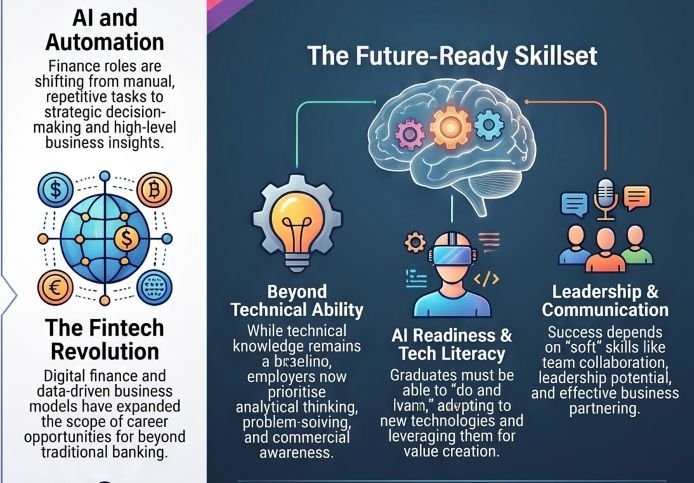
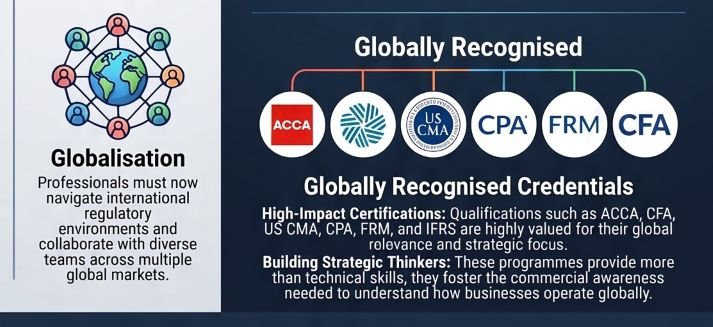
Globalisation has further accelerated this change. Finance professionals today increasingly collaborate with global teams, navigate international regulatory environments and support businesses operating across multiple markets. At the same time, employer expectations continue to evolve as organisations seek professionals who can ‘do and learn’, are technologically literate, and can adjust to new requirements. In such an environment, continuous learning and upskilling have become essential to sustaining long-term career growth.
As a result, career flexibility has emerged as one of the defining priorities for today’s students. They are looking for careers that allow them to work across industries, explore diverse functions and adapt as new opportunities emerge. Whether in consulting, corporate finance, investment banking, fintech, financial planning, analytics or entrepreneurship, students increasingly value the freedom to move across roles rather than remain confined to a single specialisation. Students now value the opportunity to move from one career to the next and to travel the globe to get their education and career.
This shift in aspirations is also influencing the qualifications students choose to pursue. Globally recognised certifications such as ACCA, US CMA, CFA, CPA, FRM and IFRS, along with specialised programmes in investment banking, are attracting growing interest because they prepare students for diverse career pathways across industries and geographies. Most importantly, these qualifications enable students to have not only the technical skills but also strategic thinking, commercial awareness and a wider understanding of the way businesses work in the current global context.
The hiring landscape reflects these changing expectations. Employers are now considering more than just academic attainment and qualifications when hiring today. They seek students who are analytical, problem-solving, communicative, team players, and tech-savvy. Analytical thinking, business partnering, AI readiness, communication, commercial awareness, leadership potential, and problem solving are all essential skills for success. While technical ability is still a basic element, it is no longer the only factor in being employable.
As the workplace evolves, so too must the learning experience. Classroom education provides a strong academic foundation, but practical exposure has become equally important in preparing students for the realities of the professional world. Internships, real-world projects, industry mentoring, networking, industry interactions, and practical experience fill the gap between theory and practice. Meanwhile, the rise in growth of edtech and flexible upskilling platforms has allowed students to access industry-relevant learning and continually be able to upgrade their skills during their careers.
Educational institutions, therefore, have an important role to play in shaping future-ready commerce professionals. This requires moving beyond conventional teaching models to create learning environments that blend academic excellence with practical industry exposure. The incorporation of widely accepted professional qualifications, the inclusion of employability and digital skills in learning, the fostering of interdisciplinary perspectives, and the enhancement of industry-academic partnerships play a pivotal role in equipping students for a rapidly evolving job market.
Across the higher education landscape, one trend is becoming increasingly evidentthe different in the kind of questions the students ask. Rather than focusing solely on course structures or examinations, they are increasingly interested in understanding career outcomes, industry relevance, global opportunities and the flexibility to transition across roles as their careers evolve. There is also growing recognition that meaningful industry engagement through mentorship, internships and interactions with professionals plays a vital role in helping learners make informed career decisions while strengthening their employability.
The future commerce graduate will not be defined by a single designation or a fixed career path. Instead, success will belong to professionals who embrace adaptability, commit to lifelong learning, leverage emerging technologies and build globally relevant skills that remain valuable across industries and markets. As the nature of work continues to evolve, commerce education will also need to evolve, and not just to prepare students for a particular profession, but to develop the mindset, skills, and resilience that can undergo multiple transformations in the future. In the years ahead, the true measure of success will not be how narrowly professionals specialise, but how confidently they learn, adapt and create value in an increasingly uncertain and dynamic world.