
By Suruchi Garg, VP – Human Resource, DCDC Kidney Care
For too long, healthcare education in India has been viewed through a narrow funnel: prepare for NEET, secure an MBBS seat, or reconsider a career in health. This binary overlooks a fundamental reality. A modern health system does not run on doctors alone. It depends on a much wider workforce that supports prevention, diagnosis, treatment, rehabilitation and long-term care.
A physician’s decision may rely on the work of a laboratory professional or imaging technologist. Recovery may depend on a physiotherapist, occupational therapist, nutrition professional or dialysis technologist. Emergency teams, optometrists, respiratory technologists, health-information specialists and behavioural-health professionals perform equally distinct functions. These are not peripheral roles. They are integral to whether care is timely, accurate, safe and humane.
India’s need for this workforce will grow as its healthcare requirements become more complex. Non-communicable diseases require years of monitoring rather than a single episode of treatment. An ageing population will need greater rehabilitation and home-based support. Diagnostic services and medical technology are reaching tertiary towns and remote locations, while digital health is linking patients, providers and records across distances. At the same time, smaller cities and rural districts need trained personnel who can make healthcare infrastructure genuinely functional. The World Health Organization has consistently emphasised that workforce planning, training and retention are fundamental to meeting India’s evolving healthcare needs.
When we talk about healthcare, we often think of doctors first—but delivering quality care is always a team effort. Kidney care is a perfect example. A dialysis session depends not only on a nephrologist but also on skilled dialysis technologists, nurses, dietitians, biomedical personnel, infection-control teams, and counsellors. Patient safety is shaped by equipment handling, clinical observation, hygiene protocols, nutrition guidance, accurate documentation and rapid escalation when something changes. Similar multidisciplinary systems operate in intensive care, surgery, diagnostics, rehabilitation and community health.
Allied health must therefore be presented as a first-choice professional pathway, not as a consolation for students who do not obtain an MBBS seat. India’s regulatory framework now recognises 57 allied and healthcare professions across ten broad categories. This includes opportunities in medical laboratory sciences, imaging, physiotherapy, occupational therapy, optometry, nutrition science, emergency and trauma care, health informatics and several specialised technologies.
Admission requirements differ by programme and institution and are continuing to evolve, making it important for students to consult current regulatory and university guidance rather than assume that every healthcare course follows the same route.
The larger challenge, however, is not simply to increase the number of courses or seats. Expansion without quality would create qualifications without competence and could ultimately compromise patient safety. Allied health education must be designed around what professionals are expected to do in real clinical environments.
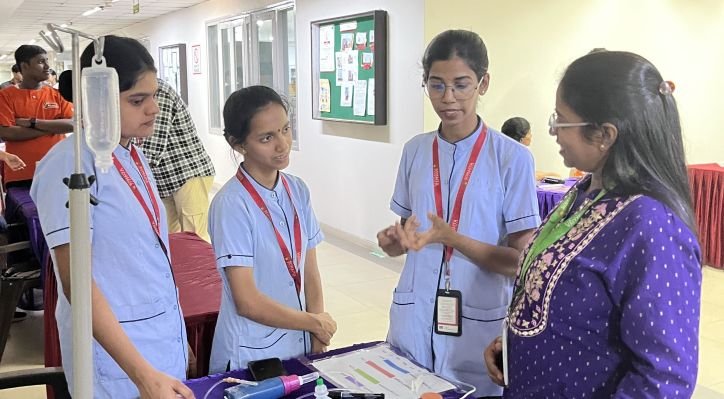
That means adequate laboratories, simulation-based learning, supervised patient exposure and internships in credible healthcare settings. Graduates should be able to operate relevant equipment, follow standard protocols, recognise warning signs, maintain records and communicate clearly with patients and families. Technical knowledge must be accompanied by empathy, teamwork, ethics and an understanding of infection prevention.
Education must also keep pace with technological change. Electronic health records, telehealth, automated diagnostics, remote monitoring and artificial intelligence are altering how healthcare is organised. Allied professionals will increasingly need digital fluency alongside clinical competence, including an understanding of privacy, data quality and the responsible use of technology.
This calls for much closer collaboration between educational institutions and healthcare providers. Employers can help shape practical curricula, offer apprenticeships and expose students and faculty to current systems of care. Institutions, in turn, must avoid treating the internship as a formality. It should be a structured transition from classroom learning to accountable practice.
Skilling cannot end at graduation either. Clear career ladders, continuing education, specialisation, fair compensation and leadership opportunities are essential for retaining trained professionals. India must also build more quality training capacity closer to underserved regions, allowing students to learn within the communities where their skills are most urgently needed.
The National Commission for Allied and Healthcare Professions Act, 2021, and the development of common standards are important steps towards greater recognition and public trust. The task now is consistent implementation across institutions and states.
Meeting India’s healthcare demand is not only about producing more doctors; it is about building complete healthcare teams. For young people, this creates a far wider landscape of meaningful careers beyond the conventional NEET-to-MBBS pathway. For India, investing in allied health education and skilling is an investment in access, quality and the resilience of the entire health system.