
By Roy Aniruddha, Co-founder, TechnoStruct Academy, Gurugram
The contrast between architecture studios and actual projects is stark. Most architecture studios would still look familiar to a graduate from 1995—pin-up boards, late nights, and a fierce devotion to the drawing. Yet walk into a leading design firm and see how its projects are actually conceived, coordinated and delivered, and it is a different world.
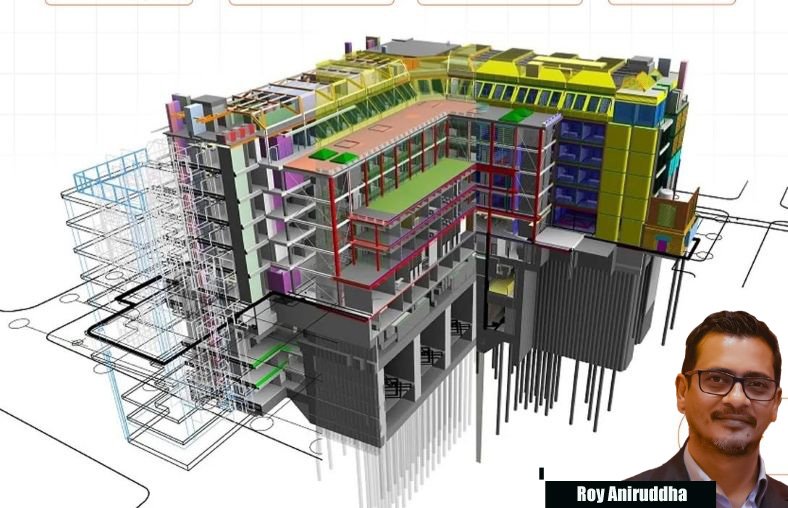
The modern project is a live, data-rich model shared across dozens of disciplines and increasingly shaped by algorithms. The gap between how architects are taught and how buildings are actually designed and delivered has become one of the profession’s quietest crises.
The architecture classroom, therefore, will need to gear up. By 2030, closing this gap will require far more than a software upgrade. It will demand a fundamental rethinking of what future-ready architects need to understand, how they learn, and how closely architectural education must align with the realities of practice.
So, what are the future-ready competencies and understandings that tomorrow’s architects will need?
Data Before Drawings
A BIM model is, at heart, a database with geometry attached. Yet many graduates can operate Revit fluently without grasping what a parameter, a classification system, or an IFC schema does downstream. They know how a wall looks, not what its data means for cost, carbon, or maintenance.
The next generation must graduate fluent in information standards such as ISO 19650, comfortable automating repetitive tasks with Dynamo, Grasshopper, or Python, and able to audit a model for data quality rather than just clashes. Firms report that a single mislabelled field can cause more rework than a misplaced column. The architect who can query a model will outpace the one who can only draw in it.
Directing AI, Not Competing with It
Generative tools will soon produce massing studies, code checks, and photoreal renderings in seconds. The scarce skill will no longer be production but judgment: writing a precise brief, interrogating the output, and spotting the beautiful result that is quietly unbuildable or non-compliant.
That puts educators in an awkward position. How do you build judgment in students who never struggled through the basics?
The answer is not to abandon fundamentals but to reframe them. Sketching by hand becomes evaluation training, a way to internalize proportion so students can critique what the machine offers.
Sustainability as a Design Constraint
“Green design” as a studio theme has run its course. Embodied carbon targets, operational energy limits, and material passports are moving from aspiration to contract clause. Tomorrow’s graduate should be able to run a whole-life carbon assessment from their own model and defend the trade-offs to a client in plain language.
Treating sustainability as an elective teaches it as an opinion. Taught from first-year studio onward, it becomes what it really is: a measurable constraint, as real as structure or budget.
Collaboration Is the Hardest Technical Skill
Ask any project director why a job stalled, and the answer is rarely software. It is an ambiguous line in a model-exchange agreement, an unclear responsibility matrix, a handoff nobody owned. Coordination failures are communication failures.
Studios should retire the myth of the lone genius. Students need to work inside common data environments and federated models, with real friction from engineers, contractors, and cost consultants. The new grading question: how well does your work plug into everyone else’s?
The Discipline Schools Forget: Identity
Every practice is a brand, and so is every graduate. Clients do not buy drawings; they buy confidence, clarity, and a point of view.
When anyone can generate a polished image in seconds, differentiation shifts to identity, trust, and demonstrable performance. Students should learn to state a design philosophy in a sentence a non-architect remembers, to tell a project’s story through data and outcomes, and to stand apart in a market flooded with AI-generated sameness. Architecture education barely touches this, and it is a costly omission.
Accountability Cannot Be Automated
As algorithms enter design decisions, one fact remains: someone still signs the drawings. Graduates must understand professional liability, data ownership, digital contracts, and algorithmic bias. “The model said so” will never hold up in court.
Picture the 2030 Studio
One project runs through a live shared model, co-authored by architecture, engineering, and construction students. An AI assistant proposes options. A carbon dashboard updates with every change. Each student presents not only the design but the data trail, the trade-offs, and the reason the building deserves to exist.
None of this is speculative. Every element exists today. What is missing is the institutional will to redesign the curriculum around it.
The Bottom Line
Software will change every eighteen months. The architects who thrive in 2030 will be those who pair data fluency, critical judgment, collaborative discipline, and a clear identity, four capabilities that do not expire.
The question facing schools is no longer “Which software should we teach?” It is “What kind of professional are we willing to build?”