
(This is reproduction of a blog by Preeti Lobana, VP and Country Manager, India, Google and Lila Ibrahim, Chief AI Readiness Officer, Google DeepMind. We have edited out a few quotes and backlinks, changed order.)
Whether it is helping teachers devote more time to mentoring students, solving fundamental genomic questions to protect food systems, or enabling local businesses to scale, AI is most impactful when developed in partnership with the people who need it most.
With its deep technical talent, diversity and thriving digital public infrastructure, India has become a hub of applied innovation, demonstrating how frontier research can be deployed at scale to transform everyday lives. Today, we are announcing new initiatives across education, crop science, agriculture and economic inclusion, designed to translate AI innovation into tangible benefits for communities across the country.
Empowering educators and building AI fluency
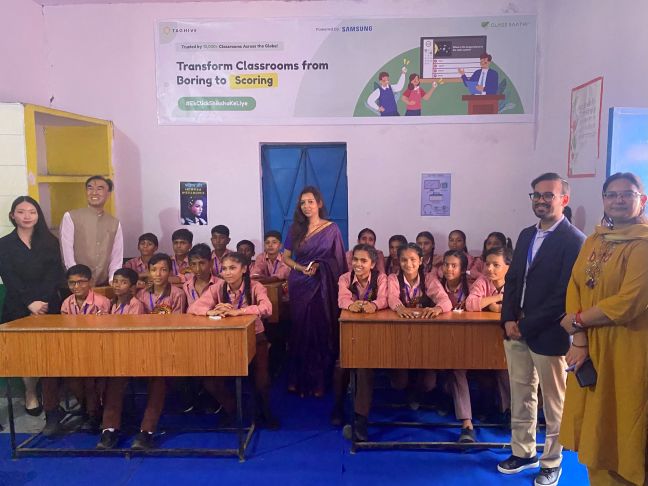
To help Teachers reclaim time for what matters most – mentoring and inspiring students – we launched the Google AI Educator Series in India this May in partnership with five state and regional partners. The mobile-first training program helps educators build practical confidence with tools like Gemini and Gemini Notebook to design lesson plans, create tailored learning aids, and streamline daily preparation.
We have already trained over 80,000 educators across the country since May. Following encouraging feedback from educators, we are now expanding the Google AI Educator Series through new partnerships with Bihar, Madhya Pradesh, Sikkim, and the Ministry of Skill Development and Entrepreneurship.
To support educators nationwide, we are also launching the program as a free, online self-paced training. Designed to fit into demanding schedules, this NEP 2020-aligned curriculum consists of flexible modules. This online training is currently available in English, with Hindi, Marathi, Telugu, Assamese, Odia, and Punjabi versions arriving later this month.
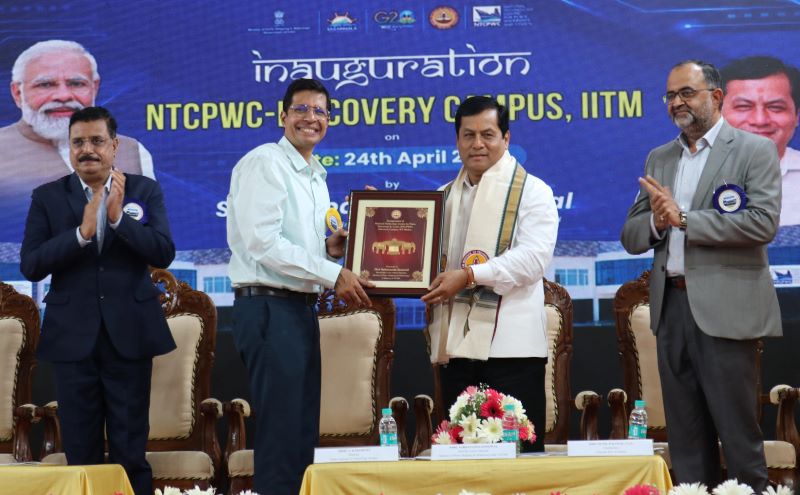
We are also supporting educators across 100 Atal Tinkering Labs through ATL Saathi, a Gemini-powered desktop application for STEM curricula, and partnering with institutions like IIT Bombay and the Office of the Principal Scientific Adviser to anchor educational AI research in real-world academic settings.
Strengthening Global Food Security Through AI
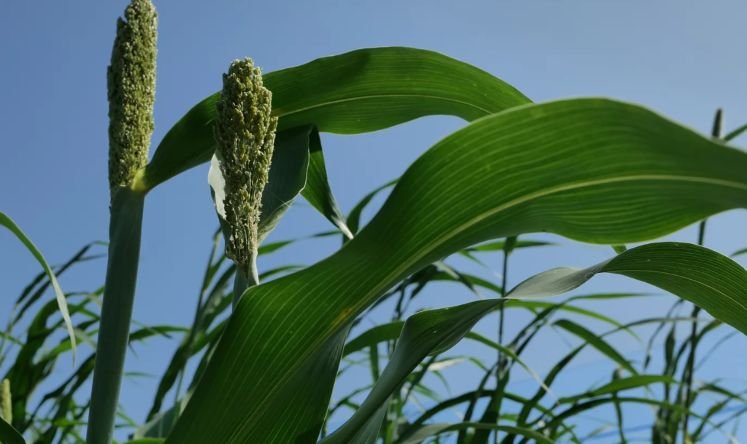
Climate change is placing growing pressure on global food systems. Climate-resilient, nutrient-rich crops such as sorghum, commonly known as jowar, are critical to helping farmers adapt and build resilience, particularly in vulnerable dryland regions.
To accelerate the development of these globally important, multipurpose crops, Google DeepMind and Google.org, through the AI Collaborative for Food Security, are collaborating with the Hyderabad-headquartered International Crops Research Institute for the Semi-Arid Tropics (ICRISAT), the HudsonAlpha Institute for Biotechnology and the Department of Genome Sciences at the University of Washington, Seattle.
The collaboration aims to create an open-access global public resource: a genetic atlas incorporating indigenous collections of sorghum varieties. It will support a range of applications, from developing nutritious cereals and animal fodder to exploring biofuel production.
Drawing on a representative sample from ICRISAT’s genebank, which contains more than 44,000 distinct seed collections from over 90 countries, including India, the initiative combines advanced genetic analysis with machine learning to identify promising plant combinations.
The resulting AI-supported genetic catalogue is intended to help breeders and researchers worldwide develop more resilient and productive sorghum varieties faster than conventional approaches, which can involve years or even decades of trial and error.
Google DeepMind will also support a three-year postdoctoral fellowship at ICRISAT—its first fellowship in India and its first outside the UK. The fellowship will help develop tools capable of characterising the genomes of other critical crops, including pulses such as chickpea, groundnut and pigeon pea (arhar or tuar dal).
The initiative aligns with India’s national emphasis on millets as a pillar of agricultural resilience, demonstrating how research rooted in local priorities can contribute to global food security.
AI for Economic Inclusion: Supporting India’s Small Businesses
India’s more than 90 million micro, small and medium enterprises (MSMEs) form the backbone of its economy and play a vital role in economic resilience. Employing more than 345 million people, these enterprises nevertheless face a range of persistent challenges that can constrain their growth.
As part of its commitment to supporting India’s national AI roadmap, Google.org is providing $15 million in funding to The/Nudge to accelerate the growth of the country’s MSMEs.
The initiative will support the development of scalable AI tools designed to improve small enterprises’ access to formal credit, market discovery and regulatory compliance. It will also feature an open call for proposals to identify innovative solutions, alongside a multilingual, voice-led platform aimed at training local talent in Tier 3 and Tier 4 towns.
The platform will help participants acquire job-ready skills and connect them directly with small businesses, widening access to employment opportunities while enabling enterprises to benefit from AI-driven solutions.
Looking Ahead
The momentum behind translating scientific advances into meaningful societal impact is only the beginning. By deepening partnerships with scientists, educators, government leaders and grassroots organisations, we are accelerating efforts to ensure that advanced AI is shaped by—and delivers benefits to—the communities building India’s future.