
By Dr. Reeta Sonawat

It’s a proud moment for our country that after 34 years, the new National Education Policy (NEP) has finally seen the light of the day. The government and the committee needs to be congratulated for the hard work that’s gone into it for ensuring that the vision of millions of Indian educators, researchers and policymakers is developed for enhancing education in India.
The NEP comes at a time when India is undergoing a severe learning crisis due to the COVID-19 pandemic. The worst impact of the crisis has been on early education as the pre-school teachers and infrastructure are both ill-equipped to cope with the demands of doorsteps delivery of education to young children under the age of six.
The new National Education Policy (NEP) honours the much-needed commitment for integrating Early Childhood Care and Education (ECCE). Since the process of developing the NEP had started many years before the pandemic, it is necessary to take into heed all the learnings from the COVID-19 crisis during the implementation phase of the policy proposals to further improve the quality and reach of early education in India.
Technology infrastructure in ECCE
Extensive use of technology in teaching and learning is one of the key principles of the NEP. The COVID-19 pandemic established the benefits of technology-aided learning and teaching for education continuity. The pandemic necessitated schools to migrate to online platforms and use pre-recorded or live-recorded lectures, use of LMS platform for curriculum delivery, PPTs, videos, etc. apart from new technologies such as meeting apps, chat groups, social media, etc for content and information dissemination during the lockdown. School teachers were trained in these new technology tools for teaching and conducting assessments and evaluations.
While implementing NEP goals for ECCE, the focus needs to be on continuous training for teachers in early education and new technologies for the delivery of education in circumstances like the present crisis.
Alternate mediums for education dissemination
During the COVID-19 pandemic, the real challenge for early education was the non-availability of the requisite technology at the homes of students for continuing education. Parents of children from economically weaker backgrounds can’t afford smartphones or computers, which could help them to continue learning for their children. Hence, to be prepared for such situations in future, the government should consider leveraging alternate mediums such as the national television channel Doordarshan for the dissemination of education in the recesses of the country. The focus should be on early education programs which are activity-based and encourage children to do physical activities, creative activities, storytelling, digital contextual rhymes and aid in their motor skills, demonstrate them simple science experiments which children can do at the uncertain time like pandemic.
Transformation of ECCEs a top priority
The government currently provides a range of services for ECCE and maternal and child health through its large network of 1.4 million anganwadis. Around 1.3 million anganwadi workers and 1.2 million anganwadi helpers provide preschool education, supplementary nutrition, health awareness, health check-ups, and immunisation and referral services to around 80 million children under the age of six years.
These anganwadi centres provide a safe, happy, and positive atmosphere to young children, which helps them in achieving their cognitive and physical development milestones. They also learn soft skills and become ready for starting formal school education. Children from weaker socio-economic backgrounds often do not get a similar conducive atmosphere at their homes. Since all anganwadis are currently shut due to the pandemic, these 80 million children are at risk of falling behind in achieving their developmental milestones and may see learning gaps widening in the aftermath.
Hence, while implementing NEP proposals, states must give priority to upgrading the anganwadi centres and draw a roadmap for reopening them soon. The states should consider involving experts from the private sector for inflicting such transformations at a faster pace.
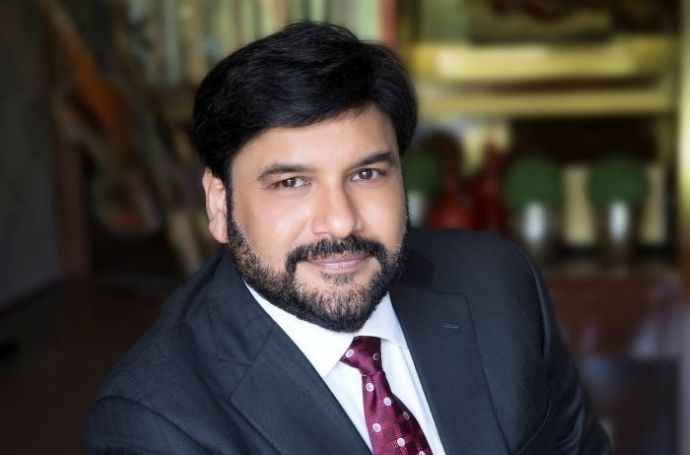
(Dr. Reeta Sonawat, Director, Academic & Training, Ampersand Group and Contributor, National Education Policy Draft 2019, ECCE; Former Dean, Professor and Head Department of Human Development, SNDT Women’s University)