
sonbahis girişsonbahissonbahis güncelgameofbetvdcasinomatbetgrandpashabetgrandpashabetエクスネスgiftcardmall/mygiftjojobetvaycasinovaycasinovaycasinocasibommatbetholiganbetmatbetjojobetmatbetcasibomjojobetjojobetcasibommatbetjojobetmatbetbetciobetcio girişromabetromabet girişbetciobetcio girişarupabetavrupabet girişhiltonbethiltonbet girişultrabetultrabet girişinterbahisinterbahis girişbetplaybetplay girişbetzulabetzula girişbahiscasinobahiscasino girişkulisbetkulisbet girişteosbetteosbet girişbetgarbetgar girişrinabetrinabet girişenjoybetenjoybet girişcasibomholiganbetbetciobetcio girişromabetromabet girişbetciobetcio girişavrupabetavrupabet girişhiltonbethiltonbet girişultrabetultrabet girişinterbahisinterbahis girişbetplaybetplay girişbetzulabetzula girişbahiscasinobahiscasino girişkulisbetkulisbet girişteosbetteosbet girişbetgarbetgar girişrinabetrinabet girişenjoybetenjoybet girişbetgarbetgar girişromabetromabet girişbetciobetcio girişkulisbetkulisbet girişbahiscasinobahiscasino girişbetzulabetzula girişbetplaybetplay girişmeritkingmeritking girişmeritkingmeritking girişmeritkingmeritking girişmeritkingmeritking girişinterbahisinterbahisultrabetultrabet girişhiltonbethiltonbet girişenjoybetenjoybet girişromabetromabet girişbetciobetciobetgarbetgar girişkulisbetkulisbet girişbahiscasinobahiscasino girişbetzulabetzula girişbetplaybetplay girişinterbahisinterbahis girişultrabetultrabet girişhiltonbethiltonbet girişenjoybetenjoybet giriştrendbettrendbet girişmeritlimancasinomeritlimancasino girişmeritlimancasino güncel girişbetcioalobetceltabetinterbahismeritbetmeritbet girişmeritbet güncel girişroyalbetenbetkalebetbahislionbetrameybetsonbahisngsbahisgonebetteosbetteosbet girişatmbahisteosbet güncel girişbetpuanbetciobetcio girişbetcio güncel girişroketbetroketbet girişroketbet güncel girişbetparibubetparibu girişbetparibu güncel girişnorabahisnorabahis girişnorabahis güncel girişromabetromabet girişbetciobetcio girişbetgarbetgar girişkulisbetkulisbet girişbahiscasinobahiscasino girişbetzulabetzula girişbetplaybetplay girişinterbahisinterbahis girişultrabetultrabet girişhiltonbethiltonbet girişenjoybetenjoybet giriştrendbettrendbet girişalobetalobet girişalobet güncel girişbetparibunorabahisalobetrestbetrestbetsafirbetsafirbetngsbahisngsbahisbetvolebetvoleenbetenbet girişenbet güncelenbet güncel girişalobetgalabetgalabet girişgalabet güncel girişceltabetceltabet girişbetebetbetebetjasminbetjasminbetinterbahisinterbahistruvabettruvabetbetpasbetpaskulisbetkulisbet girişkulisbet güncel giriş
  • About us
  • Advertise
  • Privacy & Policy
  • Contact
Saturday, April 11, 2026
  • Login
Curriculum Magazine
  • Home
  • News Updates
    • Updates Recent
    • Higher Education
    • Schools
    • Skills
    • People
  • Tech
    • Apps
    • EdTech
    • Startups
  • Events
    • Announcements
    • Conferences
    • Achievements
  • Spotlight
    • Opinion
    • Interview
    • Perspective
    • Guest Column
No Result
View All Result
Curriculum Magazine
No Result
View All Result
Home News Updates

5 Years into NIPUN Bharat, Foundational Learning Still Lacks Depth in Classrooms: LLF’s Teaching Learning Practices Survey (TLPS) 2025

by Editorial team
December 23, 2025
in News Updates, Schools
0
5 Years into NIPUN Bharat, Foundational Learning Still Lacks Depth in Classrooms: LLF’s Teaching Learning Practices Survey (TLPS) 2025
491
SHARES
1.4k
VIEWS
Share on FacebookShare on Twitter

The current decade marks India’s first sustained push towards foundational learning, following the launch of the NIPUN Bharat Mission in 2020 under the National Education Policy (NEP) 2020. The mission aims to ensure that every child attains Foundational Literacy and Numeracy (FLN) by Grade 3 by 2026–27. However, five years on, findings from the Teaching Learning Practices Survey (TLPS) 2025 suggest that India’s foundational learning ecosystem still requires significant strengthening and sustained handholding.

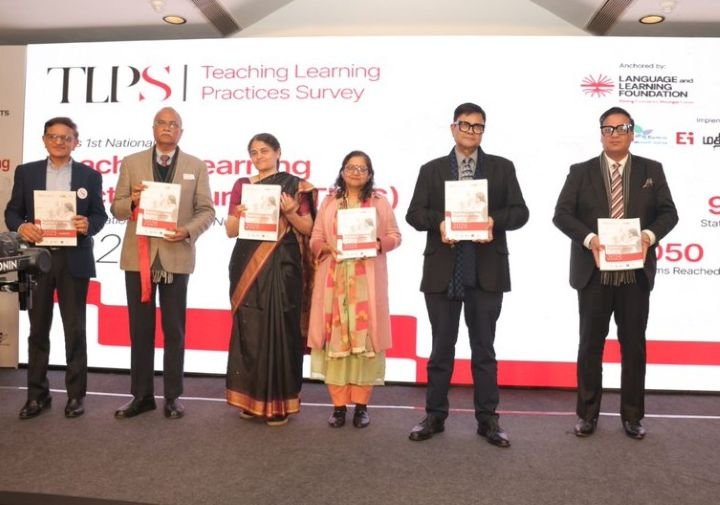
Released on December 22 in New Delhi by the Language and Learning Foundation (LLF), the TLPS 2025 flags serious concerns in classroom practices despite 83% of teachers reporting participation in in-person FLN training over the past year. Conducted over five months between November 2024 and March 2025, the survey covered 1,050 Grade 1 and 2 classrooms across 21 districts in nine states. It found limited use of children’s real-life experiences, home languages, and open-ended questioning—despite NEP 2020’s strong emphasis on mother tongue–based instruction in early grades.

Releasing the report, Sanjay Kumar, Secretary, Department of School Education & Literacy, highlighted the persistent structural challenge of multigrade, single-teacher schools. Nearly half of India’s 1.5 million schools are primary schools, many operating under multigrade conditions. “How to come out of this is a challenge for all of us,” he said. Drawing on neuroscience, Kumar underlined that while the brain is naturally wired for speech, reading and writing require formal instruction, making early education—particularly in the 0–8 age group—critical. Missing this foundational window, he cautioned, has long-term consequences for lifelong learning. He also referred to assessment data showing a steady decline in learning outcomes from Classes 3 to 6, with a sharper drop by Class 9, calling for a cultural shift from passive listening to active engagement and curiosity-driven learning. Kumar suggested that teacher training modules be redesigned based on gaps identified by the TLPS.

Echoing this concern, Shubhra Chatterji, Director, Vikramshila Education Resource Society, said India continues to remain in denial about the reality of multigrade classrooms. “Why do we do this to our teachers?” she asked, arguing for adaptations in pedagogy, strategic use of teaching-learning materials (TLMs), and changes in assessment practices as long as multigrade contexts persist. Teachers, she stressed, cannot be expected to shoulder systemic burdens without adequate support and structural reform.

The survey findings reinforce this gap between policy intent and classroom reality. While surface-level changes are visible, the instructional core remains weak. Conceptual clarity and depth of understanding are largely missing. Rote learning sustains children only to a point; beyond that, learning demands both breadth and depth. Although low-cost TLMs and pedagogical tools are available, a robust evidence base—particularly for mathematics—remains absent. This, speakers agreed, is not a failure of intent, but of content.

Dr Shailaja Menon, Consultant, Education Portfolio at Tata Trusts, noted she was not surprised that early education has long been underestimated by policymakers and systems alike. Teaching FLN to teachers themselves remains a challenge, she said, as the problem is deeply systemic and cultural, not merely technical. Addressing it requires strong pedagogical knowledge, skilled instruction, and serious engagement with children’s home languages—especially in contexts where access to quality children’s literature is limited. “There are no quick fixes,” she said, emphasising the need for resilience, optimism, and a learning-oriented ecosystem.

Classroom-level data from TLPS 2025 paints a stark picture. In 73% of classrooms, children sat in rigid rows and columns throughout the lesson, with little peer interaction. In two-thirds of classrooms, children remained mostly silent, with few opportunities to speak or learn from one another. Although 73% of teachers were aware of children’s home languages, only 10% used them consistently to support comprehension and participation. Lesson monitoring was weak, with most teachers relying on whole-class questioning that elicited choral responses. Only 30% used differentiated strategies to support varied learning levels.

Language and mathematics practices were similarly constrained. While 52% of teachers provided time for independent reading, only 18% offered guidance during this period. Writing tasks largely involved copying from the blackboard or textbooks. In mathematics, just 28% of teachers used TLMs effectively for demonstrations, and in over half the classrooms, children did not use TLMs at all. Real-life contextualisation of mathematical concepts was rare. Overall, children remained off-task for 27% of classroom time, and when engaged, most activities were mechanical and repetitive.

LLF, with support from Tata Trusts and partners including Centre for MicroFinance, Educational Initiatives, Madhi Foundation, QUEST, and Vikramshila Education Resource Society, hopes this data-driven evidence will help systems move beyond compliance to focus on strengthening classroom practice, designing responsive teacher support systems, and translating policy intent into sustained improvements in learning outcomes.

Share196Tweet123
Editorial team

Editorial team

  • Trending
  • Comments
  • Latest
29 Children Conferred Pradhan Mantri Rashtriya Bal Puraskar-2022

29 Children Conferred Pradhan Mantri Rashtriya Bal Puraskar-2022

January 24, 2022
Cottonians meet Ruskin Bond, a BCS alumnus; hear him first-hand

Cottonians meet Ruskin Bond, a BCS alumnus; hear him first-hand

May 16, 2023
Professor Dr. Jaspal Singh Sandhu is the new Vice Chancellor of Lovely Professional University

Professor Dr. Jaspal Singh Sandhu is the new Vice Chancellor of Lovely Professional University

February 4, 2025
The property water based murals and installations

The property water based murals and installations

0
Domesticity group exhibition at volery gallery in Dubai, UAE

The eye-catching water based murals and installations

0
Domesticity group exhibition at volery gallery in Dubai, UAE

Evolution of iPhone, it changed the tech industry

0
Young Designers Shine at IndiaSkills 2025–26: AMHSSC Celebrates Excellence in Fashion Technology Skill

Young Designers Shine at IndiaSkills 2025–26: AMHSSC Celebrates Excellence in Fashion Technology Skill

April 10, 2026

TOEFL launches Dance Challenge for Study-Abroad Aspirants in India

April 10, 2026
Applied sciences key to India’s energy security: CSIR DG Dr Kalaiselvi at STFAS 2026

Applied sciences key to India’s energy security: CSIR DG Dr Kalaiselvi at STFAS 2026

April 10, 2026
Curriculum Magazine

Copyright © 2010 Curriculum.

Navigate Site

  • About us
  • Advertise
  • Privacy & Policy
  • Contact

Follow Us

Welcome Back!

Login to your account below

Forgotten Password?

Retrieve your password

Please enter your username or email address to reset your password.

Log In
No Result
View All Result
  • Home

Copyright © 2010 Curriculum.

WordPress Market Everest Forms Google Sheets Everest Forms Multi Part Everest Forms PayPal Standard Everest Forms PDF Submission Everest Forms Post Submissions Everest Forms (Pro) Everest Forms Stripe Everest Forms Survey, Polls and Quiz Everest Google Places Reviews Everly – Blog & Magazine Elementor Template Kit