
The Indian Institute of Technology Ropar has signed a Memorandum of Understanding (MoU) with nonprofit ed-tech, Rocket Learning, to advance the upskilling of public frontline staff and early childhood caregivers across India. The collaboration brings together IIT Ropar’s research expertise and institutional capabilities with Rocket Learning’s large-scale grassroots reach in early childhood and foundational learning.
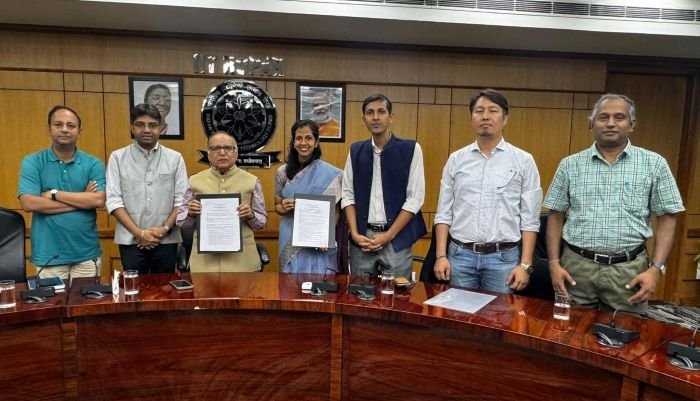
The MoU was signed by Prof. Rajeev Ahuja, Director, IIT Ropar, and Azeez Gupta, Co-Founder, Rocket Learning, in the presence of Dr. Sarang Gumfekar, Dean, IIT Ropar, and Namya Mahajan, Co-Founder, Rocket Learning on June 8.
Under this partnership, IIT Ropar and Rocket Learning will work together on developing and deploying technology-enabled training programs and support systems for Anganwadi educators, parents and other frontline caregivers. Rocket Learning currently works with government systems across 16 states and union territories and over 200 districts, having impacted 6 million children between birth and six years of age across 500,000 classrooms, including 400,000 Anganwadi educators. The organisation aims to reach 50 million underserved children by 2030.
Speaking on the occasion, Prof. Rajeev Ahuja, Director, IIT Ropar, said, “Early childhood development is one of the most under-resourced yet most consequential areas of social investment. Through this partnership, IIT Ropar will bring its research depth and technological expertise to help build a generation of skilled, confident caregivers who can change the life trajectory of millions of children. The collaboration aligns with IIT Ropar’s broader mission of leveraging academic and technological excellence for measurable social good.”
Commenting on the partnership, Azeez Gupta and Namya Mahajan, Co-Founders – Rocket Learning said, “We have seen firsthand what a skilled, confident adult can do for a child’s life. IIT Ropar brings the kind of institutional credibility and expertise that can help us use AI and technology for large-scale social good.”
Early childhood development, covering children from birth to six years of age, is widely recognised as the most impactful window for social intervention. Despite its proven significance, this domain remains critically under-resourced in India.