
Engineering education is undergoing a significant shift. A degree and technical knowledge are no longer enough to prepare students for the demands of a rapidly changing economy. On Engineers’ Day, the emphasis is increasingly on how universities can equip young engineers to identify real-world problems, work across disciplines, use emerging technologies and turn ideas into practical solutions.
The changing expectations are visible across campuses and industry. Universities are expanding opportunities for experiential learning, live projects, internships, research, innovation and industry interaction, while companies are increasingly highlighting the role of engineers in solving complex challenges behind India’s infrastructure and technological growth.
The message is clear: the engineer of the future must be more than a professional seeking employment. Engineers need to become problem-solvers, innovators, researchers and creators of solutions that have social and economic impact.
From classroom learning to solving real problems
Lovely Professional University (LPU) says its engineering ecosystem is designed around this broader approach, combining classroom learning with practical projects, industry exposure, research and career opportunities.
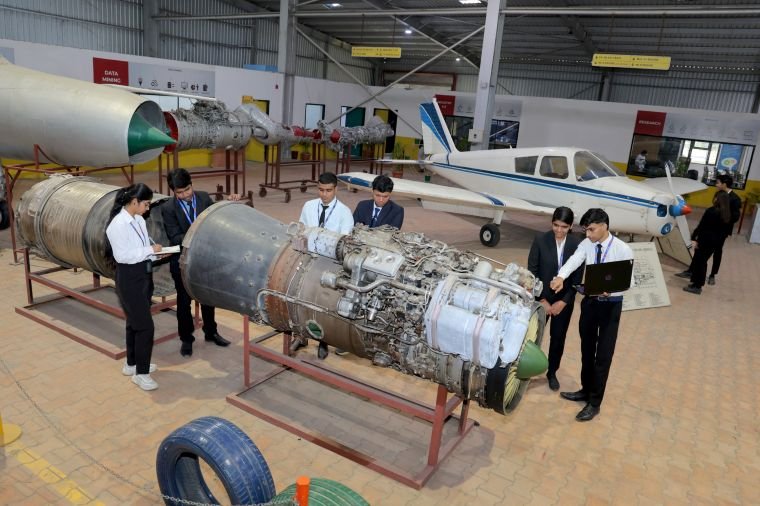
Students gain hands-on experience through live and field projects, experiential-learning laboratories, Centres of Excellence, industry mentorship, internships, consultancy and innovation-led initiatives. The emphasis extends beyond placements. LPU encourages students to develop ideas that can potentially become products, ventures or solutions to real problems. Its live-project ecosystem includes student-built projects such as a solar-powered car, an aerodynamic human-powered vehicle and the Flying Farmer, a wireless sensor-based device designed for agricultural and forest surveys.
Such projects illustrate an important shift in engineering education: students are not merely expected to reproduce concepts learned in class but to apply them to situations where there may be no ready-made answer.
Smart cities as engineering classrooms
A similar approach was visible at the Accurate Group of Institutions in Greater Noida, which organised a workshop and presentation programme for students on Engineers’ Day focusing on Artificial Intelligence, Research & Innovation and Smart Cities.
Around 250 students participated, presenting ideas and models aimed at making future cities smarter, safer, cleaner, more sustainable, better connected and citizen-centric.
The projects explored applications of AI and technology in areas including traffic management, smart security, energy management, cleanliness and sanitation, drinking water, education, electrification, healthcare, public facilities, data-driven decision-making and urban services.
The exercise reflected the kind of multidisciplinary thinking increasingly expected from engineers. Problems such as traffic congestion, waste management, water supply or urban safety cannot be solved by technology alone. They require an understanding of infrastructure, human behaviour, public policy, sustainability and the needs of citizens.
Dr. Sunil Mishra, Director, Accurate Group of Institutions, paid tribute to Bharat Ratna Sir Mokshagundam Visvesvaraya and highlighted the contribution of engineers to research, technological advancement and nation building.
He stressed that India needs new technologies, indigenous solutions and continuous innovation as it moves towards its vision of becoming a developed nation. Engineers, he said, must move beyond being professionals seeking employment and emerge as problem-solvers, researchers, innovators and contributors to nation building.
Dr. Mishra encouraged students to observe problems around them and use their technical knowledge to develop practical and innovative solutions. He also referred to the Government of India’s Smart Cities initiative and the role of technology, improved infrastructure, efficient civic services and sustainable development in transforming urban spaces.
At the conclusion of the programme, outstanding participants were felicitated with awards and certificates. The larger lesson was that engineering is not confined to a curriculum or a degree; its purpose is to transform knowledge into innovation and innovation into solutions that serve society.
Hackathons turn theory into prototypes
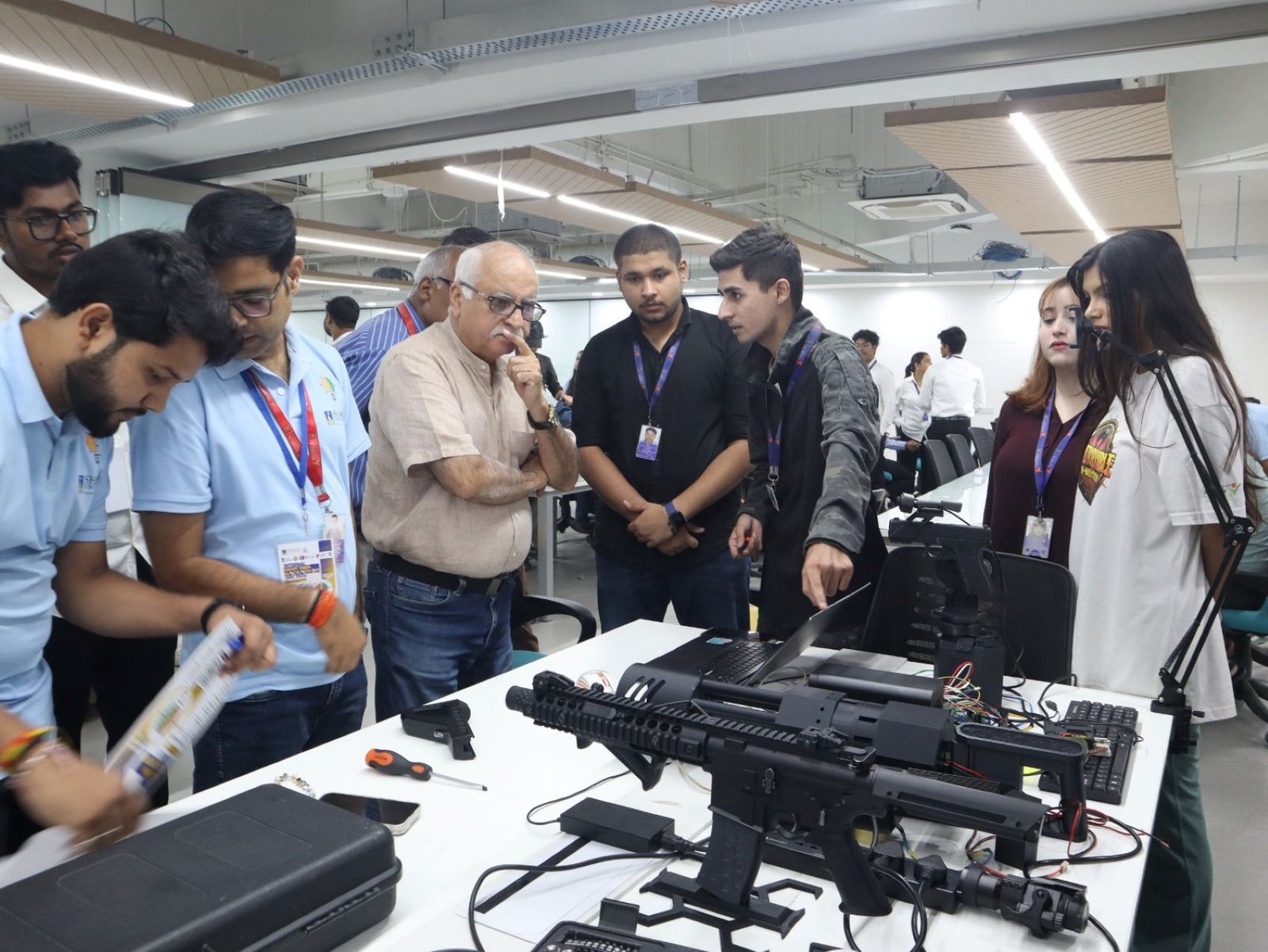
The internal Smart India Hackathon (SIH) 2026 at Sharda University offered another example of experiential engineering education at scale.
Nearly 1,400 students participated, with more than 244 multidisciplinary teams of six students working on problem statements through brainstorming, research, coding, prototyping, teamwork and presentations.
The exercise allowed students to move beyond classroom learning and apply technical knowledge to practical challenges. The themes included smart automation, disaster management, MedTech, BioTech and HealthTech, agriculture and rural development, blockchain and cybersecurity, and space technology. Software projects accounted for around 75% of the entries.
The scale of participation also created a competitive innovation environment. On the first day, 100 teams were shortlisted through 33 judging panels involving more than 150 judges. Following further evaluation, 50 teams—23 hardware, 22 software and five backups—were selected to represent Sharda University at the national SIH 2026.
Among the leading hardware teams were ZEIT v.1.0, EcoPlast Pioneers and ZEIT v.2.0, while Agentic Lab, BlueHorizon and TITANS emerged among the leading software teams.
Dr. Siba Ram Khara, Vice-Chancellor, Sharda University, said the participation of 1,400 students demonstrated the enthusiasm of young people for innovation and technological solutions, adding that the hackathon provided an opportunity to channel their talent towards real-world challenges and national development.
The engineer behind India’s infrastructure
The industry’s perspective provides another dimension to the Engineers’ Day conversation.
Hilti India has marked National Engineers’ Day with REWIND, a brand film celebrating the engineers whose ideas, expertise and problem-solving capabilities underpin the buildings, bridges, tunnels, airports, highways and other infrastructure that define modern India.
Built around the idea that “Everything that exists today, once did not exist,” the film asks viewers to look backwards from the finished structure to the idea that preceded it.
Before the skyline, there was a sketch. Before the bridge, a calculation. Before the completed project, there was a challenge waiting to be solved.
The campaign shifts attention from the physical structures to the engineers who imagine possibilities, make calculations, resolve constraints and turn ideas into reality.
That message is particularly relevant as India expands its infrastructure ambitions. Highways, metro networks, airports, industrial corridors and urban development projects are central to the country’s development agenda. Behind each is an ecosystem of engineers making thousands of technical decisions involving design, safety, productivity, sustainability, materials and execution.
Produced initially in Hindi with English subtitles, the film is also being released in Marathi, Bengali, Tamil and Malayalam, extending the campaign’s reach across India’s engineering communities.
What engineering education must prepare students for
First, students need more opportunities to work on real problems. Live projects, field assignments and community-linked challenges expose students to constraints that textbooks often cannot reproduce.
Second, industry exposure must begin before graduation. Internships, mentorship, consultancy projects and interaction with practising engineers can help students understand how technical knowledge is used in professional settings.
Third, emerging technologies need to be integrated with fundamentals. Artificial intelligence, machine learning, data systems, automation and cybersecurity are transforming engineering, but they are most useful when applied to a sound understanding of engineering principles.
Fourth, universities must encourage experimentation. Hackathons, Centres of Excellence, laboratories, prototypes and innovation challenges create spaces where students can test ideas, fail, improve and try again.
Finally, engineering education must retain its social purpose. Smart cities, healthcare, agriculture, disaster management, clean energy, water, mobility and sustainable infrastructure are not merely technology problems. They are societal challenges in which engineering can make a measurable difference.
The Engineers’ Day message, therefore, extends beyond celebrating engineers and remembering the legacy of Visvesvaraya. It is also a reminder of what engineering education should accomplish.