
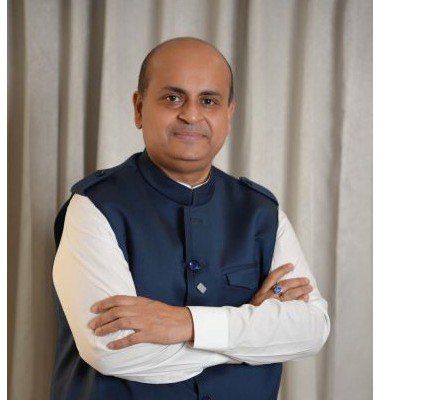
By Shailendra Bhadauria, Chancellor, Pratap University, Jaipur
How should young people approach their cultural heritage? Perhaps the best place to begin is by asking questions.
 In an age when information travels faster than ever, young people are constantly exposed to claims about India’s ancient wisdom, traditions and achievements. A social media reel may suggest that an ancient practice could cure a modern disease, while another post may credit an ancient Indian text with a scientific discovery. Such claims can spread rapidly, especially when they appeal to our sense of cultural pride.
But before believing or sharing such information, it is important to ask where it came from and what evidence supports it. Is the claim based on historical records, scientific research or merely an interpretation of an ancient text? Has it been independently verified? Does it reflect what the original source actually says?
These questions do not diminish our cultural heritage. On the contrary, they help us understand it more deeply.
We do not have to accept every claim about our culture simply because we are proud of it. We can value the knowledge and experiences of our ancestors while remaining open to questioning what we have inherited. Cultural pride and critical thinking need not be contradictory. In fact, a genuine appreciation of our heritage should encourage us to explore it with curiosity rather than accept every claim uncritically.
Understanding the origins of traditions
Many traditions emerged from the circumstances in which people lived. Local food habits, climatic conditions, available plants, agricultural practices and the resources of a particular region shaped everyday life. Over generations, some of these practices became part of family routines and community customs.
A tradition that may appear unusual today could have originated as a practical response to the conditions of an earlier time. Others may have developed through religious beliefs, social customs or the collective experiences of a community.
Young people can begin by asking why a particular practice emerged, what purpose it served and how it changed over time. They may discover that a custom was closely connected to the environment, that it helped communities organise their lives or that it expressed a particular belief.
Such exploration also helps us recognise that Indian culture is not a single, uniform tradition. It is a rich and diverse collection of regional, linguistic, religious and community practices. Understanding this diversity allows young people to appreciate their own cultural backgrounds while respecting the experiences and traditions of others.
Learning to distinguish evidence from belief
One important area where this questioning becomes particularly relevant is the relationship between traditional knowledge and modern science.
Yoga, for instance, has been studied extensively, and research suggests that certain practices can help reduce stress and support mental well-being. This does not mean that every claim made about yoga is scientifically established, or that it can replace medical treatment when treatment is needed.
The distinction is important. A practice may have genuine benefits without every explanation or claim associated with it being accurate.
Similarly, traditional systems of medicine, food practices and wellness routines deserve serious examination. Their value should be assessed through credible research, not merely through their age or popularity. Equally, a lack of scientific evidence for a particular claim does not mean that every aspect of a tradition is without cultural or historical significance.
Young people need to develop the ability to distinguish between what is historically documented, what is supported by scientific evidence, what remains uncertain and what belongs to the realm of faith or belief.
This approach is particularly important in the digital age, when misinformation can acquire the appearance of authority simply through repetition. A viral post is not necessarily a reliable source, and an impressive claim is not necessarily a proven fact.
From inherited knowledge to contemporary solutions
Questioning our heritage can also open up opportunities for innovation.
Traditional knowledge is not merely something to be preserved in books or displayed in museums. It can provide inspiration for addressing contemporary challenges, provided its relevance and effectiveness are carefully examined.
Consider a young person interested in entrepreneurship. They could explore how local craftspeople produce their goods and investigate ways to help them reach wider markets through digital platforms. Such an initiative could connect traditional craftsmanship with contemporary business opportunities while supporting local livelihoods.
A student interested in environmental studies might examine traditional methods of rainwater harvesting and investigate whether they could be adapted to a neighbourhood facing water shortages. The student could study how these methods worked, identify their limitations and explore whether modern materials or technologies could make them more effective.
Similarly, traditional food preservation techniques, indigenous agricultural practices and local approaches to managing natural resources could provide useful starting points for research projects.
The important point is that these ideas must be tested. Not every traditional method will be suitable for present-day conditions, and some may require significant modifications. But the process of investigating them can help young people develop research skills, creativity and an appreciation of the relationship between the past and the present.
The role of educational institutions
Educational institutions have an important role to play in encouraging this spirit of inquiry.
Students should not be expected merely to memorise historical facts or learn about cultural practices without understanding their context. They should be encouraged to investigate the origins of traditions, consult credible sources, compare different interpretations and discuss what they discover.
Classroom discussions, research projects, field visits and interactions with historians, scientists, artisans and community elders can help make cultural learning more meaningful.
For instance, students could document a local tradition by interviewing older members of their community, examining historical records and exploring how the practice has evolved. They could then present their findings, distinguishing between what they discovered through research and what they learned through personal accounts.
Such activities can help students understand that cultural heritage is not static. It is continually interpreted, adapted and sometimes challenged by successive generations.
Equally important, young people should feel comfortable asking questions without being made to believe that questioning a tradition amounts to disrespecting their culture. Respectful disagreement and critical inquiry are essential to meaningful learning.
Staying connected to our roots in a changing world
India’s cultural heritage offers young people an extraordinary opportunity to explore the experiences, ideas and achievements of earlier generations. But the value of this heritage lies not only in what it tells us about the past. It also lies in what it can teach us about the present and inspire us to do in the future.
Young people can remain connected to their roots while embracing scientific thinking, technological advances and changing social realities. They can appreciate traditional knowledge without assuming that everything inherited from the past must remain unchanged.
Not every tradition needs to be followed simply because it has existed for generations. Some practices may continue to serve a useful purpose, while others may have lost their relevance or may need to be reconsidered.
What matters is understanding why a tradition exists, what it means to the people who practise it and whether it continues to make sense in contemporary life.
Ultimately, a meaningful relationship with cultural heritage is not built on unquestioning acceptance. It is built on curiosity, understanding and the willingness to learn. By asking questions, examining evidence and engaging respectfully with different perspectives, young people can preserve what is valuable in their heritage while contributing to its continued evolution.