
With the pandemic expanding rapidly across South Asia that contains a quarter of the world’s population, the latest Lives Upended (a UNICEF Report) describes the disastrous immediate and longer-term consequences that the virus and the measures to curb it have had on 600 million children and the services they depend on.

“The side-effects of the pandemic across South Asia, including the lockdown and other measures, have been damaging for children in numerous ways,” said Jean Gough, UNICEF Regional Director for South Asia. “But the longer-term impact of the economic crisis on children will be on a different scale entirely. Without urgent action now, COVID-19 could destroy the hopes and futures of an entire generation.”
According to the report, immunization, nutrition and other vital health services have been severely disrupted, potentially threatening the lives of up to 459,000 children and mothers over the next six months. Food insecurity is growing: A UNICEF survey in Sri Lanka showed that 30 per cent of families have reduced their food consumption. In Bangladesh, some of the poorest families are unable to afford three meals a day.
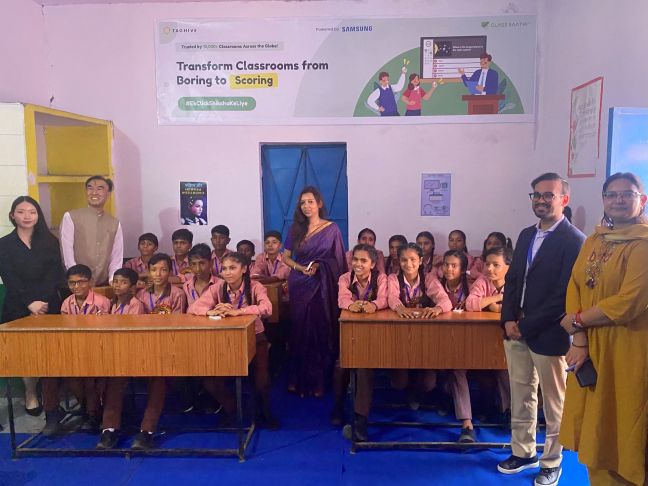
With schools closed, more than 430 million children have had to rely on remote learning which have only partially filled the gap; many households – especially in rural areas – have no electricity, let alone internet access. There are concerns that some disadvantaged students may join the nearly 32 million children who were already out of school before COVID-19 struck.
Phone helplines are reporting a surge in calls from children suffering violence and abuse during confinement at home. Some children are struggling with depression, even resulting in attempts at suicide.
The report also notes that life-saving vaccination campaigns against measles, polio and other diseases must resume, as should work to help the estimated 7.7 million children who suffer from severe wasting — more than half the global total. Schools should reopen as soon as possible provided adequate handwashing and other physical distancing precautions are in place.
In recent years, rising levels of prosperity produced significant health, education and other advances for children in South Asia. Improvements in infant and maternal mortality were matched by declines in the number of out-of-school children and in child marriages.
But the economic turmoil triggered by COVID-19 is hitting families across the region hard. Large-scale job losses and wage cuts have coincided with the loss of remittances from overseas workers and from tourism. UNICEF projections show that over the coming six months as many as 120 million more children could be pushed into poverty and food insecurity, joining some 240 million children already classified as poor.
In order to mitigate the impact on poorer families, the report says that Governments should immediately direct more resources towards social protection schemes, including emergency universal child benefits and school feeding programmes.
“Putting such measures in place now will help the countries of South Asia transition faster from the humanitarian crisis caused by COVID-19 to a resilient and sustainable development model, with long term benefits for child wellbeing, the economy, and social cohesion,” said Gough.
The report highlights the importance of tackling critical child-related issues exposed by COVID-19 including:
- Providing community health workers and other social services staff with personal protective equipment (PPE) to enable them to do their work safely.
- Scaling up of low-tech home learning solutions (for example, using a combination of paper and mobile phone-based materials) especially for vulnerable groups such as girls, children living in remote areas and urban slums, and children with disabilities.
- Addressing the widescale need for water supply, toilets and hygiene services in schools and health care facilities.
- Working with religious leaders and other partners to address the myths and hate-speech that the pandemic has given rise to.
By early June, within its ongoing COVID-19 response across the region, UNICEF and its governmental and other partners had:
- Reached 356,820 people including children with community-based mental health and psychosocial support.
- Engaged an estimated 100 million people on issues related to COVID-19 through risk communication and community engagement.
- Reached 10.6 million people with critical WASH services and supplies as part of infection prevention control.
- Trained 1.4 million health care providers to detect, refer and manage COVID-19 cases in children, as well as pregnant and breastfeeding women.
- Reached 7.3 million women and children with essential health care services including immunization, prenatal and postnatal care, HIV care and gender-based violence services in UNICEF supported facilities.