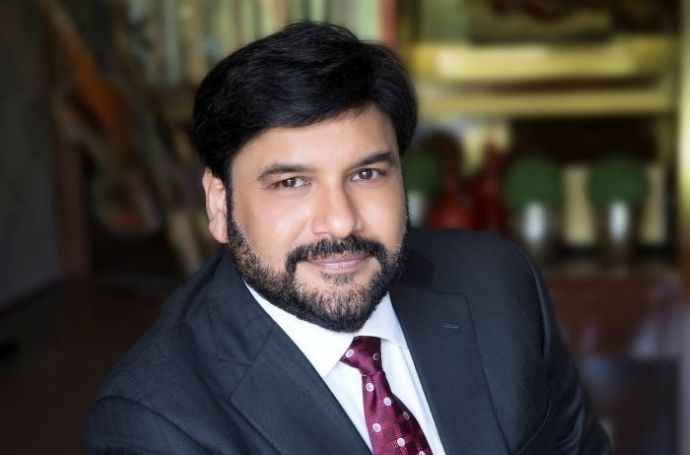


Arunabh Singh, alumnus of Hindu College and King’s College London, a respected educationist and edupreneur, and Director of Nehru World School, Ghaziabad, has recently been appointed President of the Association for Reinventing School Education (ARISE)—a national network representing over 18,000 private schools across India. He also co-founded the Healthy Planet early education chain in 2023 along with Dr. Suhasini Kanwar and contributes to key national education frameworks under NEP 2020 and CBSE.
Q: Congratulations on your appointment as President of ARISE. How does it feel to take on this leadership role at a time when schools are navigating rapid policy and technological changes?
It is both a privilege and a deep responsibility. I’ve seen ARISE evolve from an idea into a credible, collective voice for progressive school education in India. Today, as education systems grapple with technological disruption, shifting policy frameworks, and changing societal expectations, the role of collaborative platforms like ARISE has never been more critical.
My focus is to strengthen this platform further, ensuring it continues to enable meaningful dialogue, advocate for balanced reforms, and support schools in navigating complexity while keeping the student at the centre.
Q: Could you briefly share ARISE’s current strength, agenda, and how it functions?
ARISE today represents a strong and growing network of progressive K–12 institutions across the country, with a presence across 20 states, encompassing over 1,800 schools, 95,000+ teachers, and impacting more than 1.5 million students. Operationally, ARISE functions as a member-driven platform, with structured governance and active engagement through national forums, state-level initiatives, and thematic working groups.
The organization operates on these three foundational pillars:
- Policy Advocacy: Engaging constructively with policymakers and regulators to build a a more enabling, transparent, and forward-looking ecosystem.
- Capacity Building & Knowledge Exchange: Creating platforms for collaboration, learning, and innovation among school leaders and educators
- Community & Collaboration: Fostering a trusted network for sharing best practices and addressing common challenges
Q: In your view, what are the most pressing challenges facing progressive private schools in particular, and private schools more broadly?
Private schools today are navigating not just operational challenges, but a deeper structural imbalance in the ecosystem. At the heart of it lies a fundamental tension while schools are expected to deliver high-quality, future-ready education, they often operate within a regulatory and financial framework that limits their ability to innovate, scale, and sustain. And, from a policy standpoint, three broad challenges stand out.
First, there is a need to reimagine the regulatory architecture. Over time, multiple layers of approvals, fragmented compliance requirements, and legacy processes have created an environment that is often procedural rather than enabling. What the sector needs is a more streamlined, time-bound, and trust-based framework one that ensures accountability but reduces friction.
Second, the issue of capital and financial sustainability requires urgent attention. School education remains one of the few sectors where the ability to attract long-term, patient capital is constrained, despite growing demand and rising expectations. There is a strong case for separating consumer protection from capital regulation ensuring that student interests remain safeguarded, while allowing institutions the flexibility to access resources, invest in quality, and build capacity over time.
Third, there is a need to strengthen institutional autonomy and flexibility—whether in curriculum design, talent management, or operational decision-making. Schools must be empowered to respond to student needs, adopt diverse academic pathways, and build high-quality teams. At present, rigid norms often limit this agility.
Equally important is the need to view schools as long-term institutions, supported by stable policy environments, predictable frameworks, and appropriate safeguards for leadership where actions are taken in good faith.
Ultimately, the objective is not deregulation for its own sake, but smart regulation—one that balances accountability with autonomy, protects students while enabling institutions, and recognises private schools as critical partners in nation-building.
Q: As an edupreneur with a strong foundation as an education specialist, how do you view the shifting policy landscape today? Also, a quick comment on penetration of international school examination boards?
The policy landscape over the past few years has been dynamic and, in many ways, encouraging. There is a visible intent to shift towards flexibility, multidisciplinary learning, and competency-based education.
However, implementation remains uneven, and schools often grapple with interpretation and operationalisation at the ground level. This is where platforms like ARISE play a bridging role.
As for international boards, their growing presence reflects increasing parental aspirations and global exposure. Rather than viewing this as competition, it should be seen as an opportunity for Indian boards and institutions to evolve, innovate, and benchmark themselves globally while preserving contextual relevance.
Q: NEP 2020 remains a major reform. Has it made an impact, and what needs attention now?
Five years since its introduction, NEP 2020 remains a bold and forward-looking framework. It has shifted the discourse from rote learning to competency, from rigid streams to flexibility, and from narrow outcomes to holistic development.
We are now in the early stages of implementation where intent is widely accepted, but execution remains uneven.
There have been encouraging shifts. Schools are increasingly adopting experiential learning, multidisciplinary approaches, and a stronger focus on foundational skills, alongside a more student-centric mindset.
However, the next phase must move beyond vision to systemic enablement. Three areas need sharper attention: greater clarity and alignment across regulations, capacity building at scale for educators and institutions, and a more enabling policy environment that allows autonomy with accountability.
Private schools, given their scale and ability to innovate, will be central to demonstrating effective implementation. Enabling them as partners will be key.
NEP 2020 has reset the direction of Indian education the priority now is to ensure that this direction is supported by the right systems and frameworks so its impact is felt meaningfully in classrooms.
Q: How do you manage work-life balance with multiple responsibilities?
Beyond my professional responsibilities, I believe strongly in continuous learning and staying meaningfully engaged with the larger education ecosystem. I find immense value in being part of community-led initiatives spaces where educators, practitioners, and thought leaders come together to exchange ideas, challenge perspectives, and co-create solutions.
I actively seek opportunities to engage with such networks, as these interactions often lead to deeper insights and unexpected synergies that can shape more informed and impactful work.
At a personal level, I also value time with family and moments that allow me to reflect and recharge. Whether through reading, travel, or simply stepping back, these experiences bring balance and perspective both of which are essential in leadership roles.