
The Central Apprenticeship Council (CAC) on May 26 recommended a 36% increase in stipend provided under the National Apprenticeship Promotion Scheme (NAPS) and the National Apprenticeship Training Scheme (NATS). The recommendation, which would revise the stipend range from the existing ₹5,000–₹9,000 to ₹6,800–₹12,300, aims to reduce dropout rates and attract more candidates across diverse sectors.
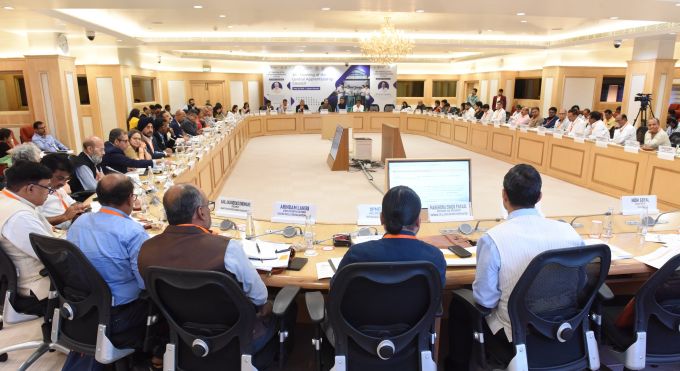
The Central Apprenticeship Council 38th meeting chaired by Jayant Chaudhary, union minister for MSDE in New Delhi on May 26 made this recommendation after undertaking a review of India’s evolving apprenticeship landscape and discussed critical reforms to enhance the outcome. The previous CAC meeting was held in June 2021.
Stipend revision was a key focus during the discussion, which is proposed to be automatically adjusted biennially based on changes in the Consumer Price Index (CPI), aligning with the salary increment cycle in July. This would be done under the administrative purview of the Ministry of Skill Development & Entrepreneurship (MSDE) and later reported to the Committee under Rule 11 of the Apprenticeship Rules, 1992.
The Council comprises representatives from Central Ministries, State Governments, industry (public and private), academia, labour bodies, and technical experts. Notable members include Chairpersons of BHEL, Indian Oil, Tata Group, Maruti Suzuki, Reliance Industries, NSDC, UGC, AICTE, and senior bureaucrats from Ministries such as Education, Labour, MSME, Railways, and Textiles. State apprenticeship advisors from ten key states and domain experts with experience in education, labour, and industry also serve on the Council.
In his keynote address, Shri Jayant Chaudhary said, “Apprenticeship is not just a skilling mechanism, it is a bridge that connects education, industry, and employment, especially for our rural youth. With NAPS and NATS as pillars supported by a strong legal framework, we are actively reforming the system to make it more inclusive, responsive, and aspirational. The introduction of micro-apprenticeships, optional trades, and greater autonomy to higher education institutions under NATS are part of our strategy to scale and deepen impact. Inclusivity is at the core of these programmes, and we have introduced key reforms to strengthen it. Our vision is to ensure every young person, regardless of background, gets a fair shot at a meaningful career through hands-on learning and industry exposure,”
The Council also emphasized key reforms to strengthen apprenticeship-integrated education and streamline policy frameworks under the Apprenticeship Rules, 1992.
Offering a powerful combination of classroom learning and hands-on experience, apprenticeships have emerged as a credible alternative to traditional degrees. Under PM-NAPS, over 43.47 lakh apprentices have been engaged across 36 States and Union Territories as of 19 May 2025, with participation from more than 51,000 establishments. Notably, female participation has reached 20%, with focused efforts underway to boost this further. Simultaneously, the NATS scheme, aimed at graduates and diploma holders, has also grown steadily—enrolling over 5.23 lakh apprentices in FY 2024-25 alone.
A significant agenda item was the promotion of apprenticeship embedded education programmes, including the introduction of new definitions such as “Degree Apprenticeship,” “Institution,” “UGC,” and “Contractual Staff,” to align educational curricula with on-the-job training requirements.
It also proposed enabling employers to deliver Basic and Practical Training through online, virtual, or blended modes, ensuring flexibility in learning without compromising the quality or compliance with centrally approved curriculum.
Besides, the meeting discussed the creation of Regional Boards at new locations to improve the administration and outreach of the National Apprenticeship Training Scheme (NATS) and regulate the Apprenticeship Embedded Degree Programme (AEDP), necessitating the insertion of a new clause in the Apprenticeship Rules.
The Council also emphasized inclusivity by proposing the insertion of a definition for “Person with Benchmark Disability” in line with the Rights of Persons with Disabilities (RPwD) Act. It recommended that trades or subject fields specify their suitability for persons with benchmark disabilities and reserve training places accordingly, promoting equitable access and participation in apprenticeship training.
The members also deliberated on a range of operational and policy-level issues to enhance the effectiveness of the apprenticeship programme. Among the key recommendations was the rationalization of stipends, with a suggestion to vary stipend amounts based on the location of apprenticeship to reflect local cost-of-living differences.
The 38th CAC meeting also proposed replacing the existing list of industries (1987 code) with one aligned to NIC Code 2008 thereby expanding the scope of Apprenticeship Training to include emerging sectors like IT, software services, telecommunications, biotechnology, and renewable energy. Any future updates in the industrial classification will automatically reflect in the Apprenticeship Rules.
Members also stressed the importance of expanding establishment coverage to bring more employers into the apprenticeship ecosystem. Addressing the risk of candidates discontinuing their apprenticeships midway, the Council underscored the need to make apprenticeship opportunities more attractive and rewarding. Another significant proposal involved notifying Craftsmen Training Scheme (CTS) courses and apprenticeship training simultaneously to ensure alignment. Additionally, the need for insurance coverage for apprentices during the contract period was discussed as a measure to provide greater security and protection for candidates.
The Minister also unveiled a report by KPMG, titled “Data Analysis Report: National Apprenticeship Promotion Scheme (Feb2018-April2025)”, which presents a comprehensive, data-driven review of apprenticeship trends under NAPS.
The outcomes of the meeting are expected to shape the next wave of apprenticeship and skilling reforms in India, aligned with the broader vision of ‘Kushal Bharat, Viksit Bharat’.