
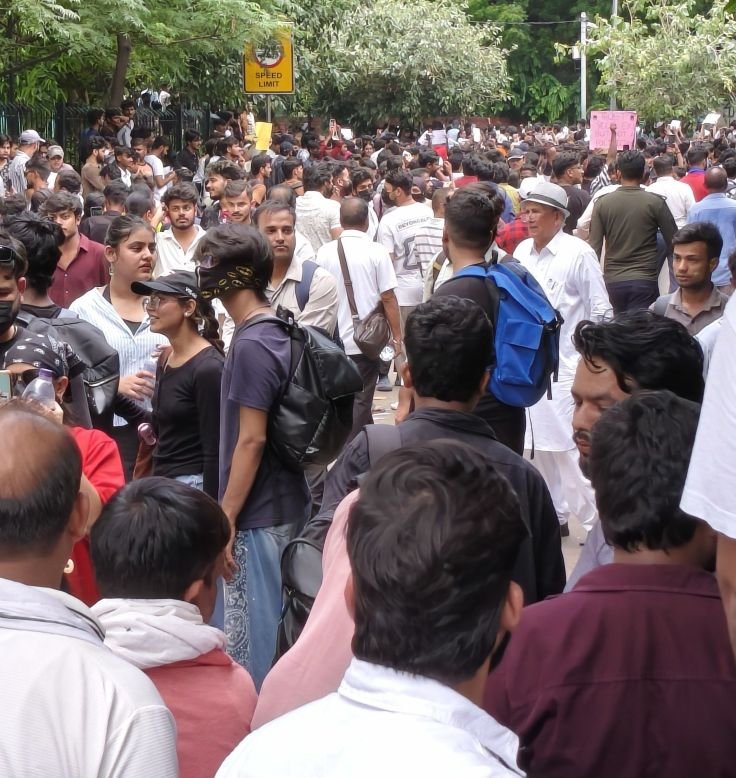
In a series of rapid developments that appear aimed at easing nationwide youth protests over competitive examination paper leaks and restoring confidence in the country’s examination system, the Central government has announced plans to establish fast-track courts for paper leak cases, reshuffled the top bureaucracy in the Ministry of Education, and witnessed education reformer and climate activist Sonam Wangchuk end his 26-day indefinite hunger strike.
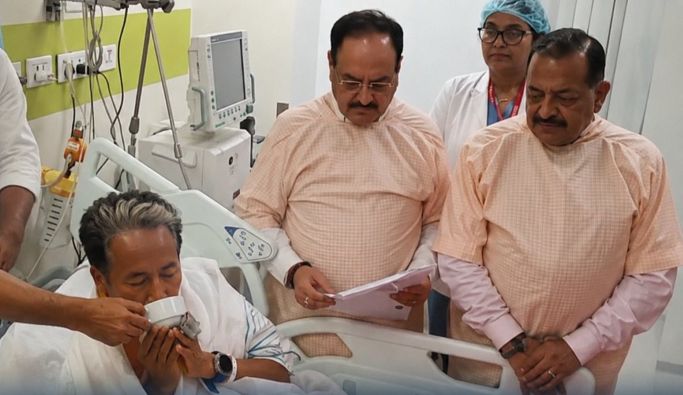
Wangchuk broke his fast in the early hours of July 24 at Medanta Hospital, Gurugram, where he had been shifted after his health deteriorated. According to reports, Wangchuk—who not only galvanized the protests but also helped mobilize broad public support for students demanding accountability in the wake of the NEET paper leak—agreed to end his fast after the Centre assured him that students participating in peaceful protests would not face punitive or retaliatory legal action. He said he was concerned that the prolonged agitation could trigger violence and appealed to supporters to continue their campaign through peaceful and democratic means.
Prime Minister Narendra Modi, who had earlier announced the proposal for fast-track courts to deal exclusively with examination paper leak cases, followed it up with a video message late on July 23. He said the draft legislation containing harsher punishments had been prepared by the concerned ministries and would be placed before the Union Cabinet. Subject to Cabinet approval, the proposed Bill is expected to be introduced in Parliament early next week, possibly on Monday.
Cabinet approves draft bill
The Union Cabinet on July 24 approved a draft bill to amend ‘The Public Examinations (Prevention of Unfair Means) Act, 2024’, proposing a minimum punishment of five years’ imprisonment for individuals involved in paper leaks and/or a fine of up to Rs 10 crore.
The approved the draft bill will hand stricter punishments to those involved in paper leaks as compared to the existing law.The present law has provisions for three to five years’ imprisonment for individuals, and five to 10 years’ imprisonment and a minimum fine of Rs 1 crore for those involved in the organised crime of cheating and paper leaks.
The bill is aimed at preventing organised gangs and institutions that indulge in unfair means for monetary gains, while protecting the candidates from its provisions.
The existing law is aimed at curbing leaks, malpractices as well as organised malpractices in recruitment examinations like UPSC, SSC, etc., and entrance tests such as NEET, JEE, and CUET.
New secretaries appointed
In another significant development, the government has appointed new secretaries to both departments under the Ministry of Education, which has been under unprecedented public and political scrutiny over the governance of competitive examinations.
Vineet Joshi, who had been overseeing both the Department of Higher Education and, for a period, the Department of School Education and Literacy, has been transferred, restoring separate administrative leadership to the ministry’s two principal departments.
Naresh Pal Gangwar, a 1994-batch IAS officer of the Rajasthan cadre, has been appointed Secretary, Department of Higher Education. He moves from the Department of Animal Husbandry & Dairying and brings with him a strong technology and public policy background, including degrees from IIT Delhi and the erstwhile University of Roorkee (now IIT Roorkee). T. K. Anil Kumar, a 1995-batch IAS officer of the Karnataka cadre, has been appointed Secretary, Department of School Education and Literacy. Prior to this, he served as Additional Secretary in the Department of Rural Development. Notably, both officers have engineering backgrounds, reflecting the government’s preference for technocratic leadership at a time when education governance is increasingly intertwined with digital systems, examination security and AI-driven reforms.
Despite Wangchuk’s decision to end his fast, the agitation itself is far from over. The Coachroach Janta Party (CJP), which has spearheaded nationwide protests over the NEET paper leak and examination reforms, said Wangchuk’s move does not signal the end of the campaign. CJP founder Abhijeet Dipke reiterated that demonstrations would continue until the group’s principal demands—including the resignation of Union Education Minister Dharmendra Pradhan and comprehensive examination reforms—are met.
The developments now shift the political spotlight to Parliament, where the Opposition has repeatedly disrupted proceedings over the examination crisis. With the proposed fast-track courts legislation likely to be introduced next week and the government undertaking key administrative changes within the Ministry of Education, the coming days are expected to determine whether these measures are sufficient to defuse one of the most significant youth-led education movements in recent years.