
With child safety in schools already a pressing concern, recent incidents have lent greater urgency to the debate. Experts are now advocating solutions that go beyond broad policy prescriptions and address safety at the institutional and operational levels.
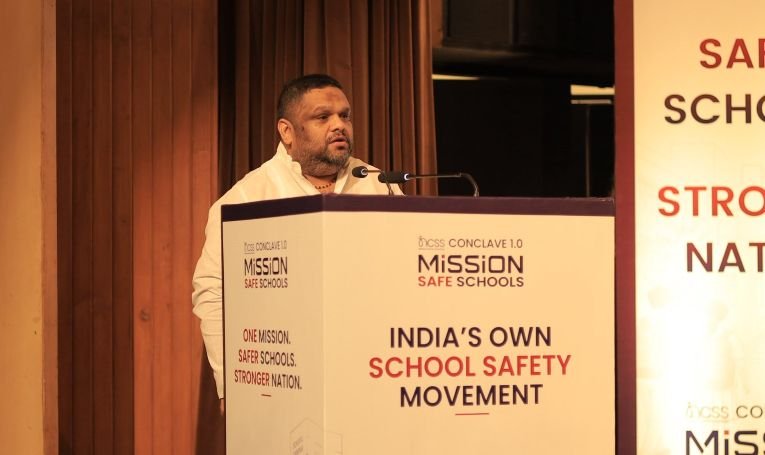
Speaking at Mission Safe Schools Conclave 1.0, organised by Delhi-based non-profit National Council for School Safety (NCSS) on November 19, Priyank Kanoongo, former two-term Chairperson of the National Commission for Protection of Child Rights (NCPCR) and currently a Member of the National Human Rights Commission (NHRC), emphasised the importance of parental access to schools.
Drawing on his experience at the NCPCR, Kanoongo said parental involvement was vital for strengthening the monitoring of safety guidelines and facilitating communication about children’s emotional well-being. He said considerable work had been undertaken during his tenure to establish a basic framework for school safety. He urged school leaders, teachers and managements to follow the NCPCR’s Manual on Safety and Security of Children in Schools.
Pointing to the risks associated with certain facilities introduced by private schools to justify higher fees, he cautioned against prioritising attractive amenities over children’s safety. Unmanned swimming pools and horse-riding facilities without adequate safeguards, he observed, could expose children to serious risks, including drowning and falls.
He advocated democratically elected Parent-Teacher Associations (PTAs), arguing that they could help ensure adherence to child rights and safety measures across the physical, virtual and emotional dimensions of school life.
Earlier, addressing the inaugural session, Maj. Rishab Singh Sambyal (retd.), a leadership speaker, who served as an ADC to the President of India, suggested that schools adopt the buddy system practised in the military to ensure that every student has someone to turn to in an emergency. A child, he said, should be able to identify a person they could approach for help or support within three seconds.
Drawing a distinction between compliance and commitment, he said compliance meant adhering to prescribed rules and regulations, while commitment involved developing a culture of preparedness and consistently putting safety practices into action.
He emphasised that safety protocols must be internalised, regularly practised and assessed so that systems do not fail when a crisis arises. Assessments, he added, should focus on identifying gaps and learning from them rather than merely assigning blame for mistakes.
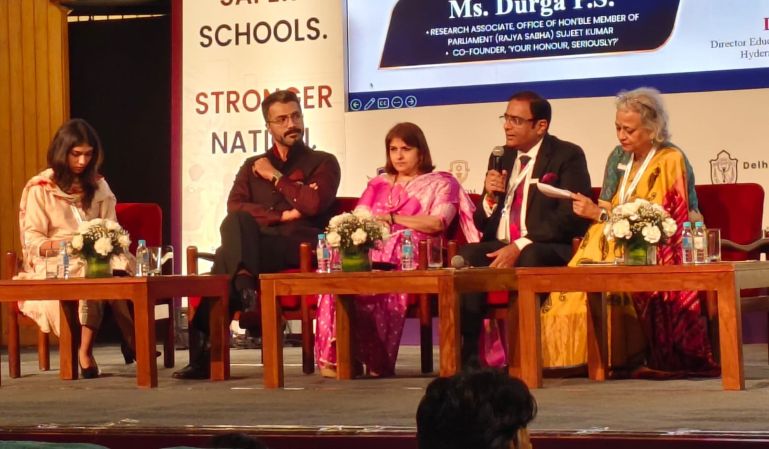
During a panel discussion, Anirudh Sachdeva, Director of Holy Public School, Rewari, called on schools to remain open to third-party safety audits.
“Even though we, as directors, owners, principals or managers, know our schools like the back of our hands and feel very confident about each and every space, asset, person and property, a reality check does add to that confidence,” he said.
Amrita Burman, Director of the Sunbeam Group of Schools, Varanasi, highlighted the need for continuous training of hostel staff and teachers, particularly in residential schools. “We need teachers trained to listen and respond,” she said.
Dennis George of the Shalom Group of Schools described school as a child’s second home and teachers as second parents. Emphasising the importance of nurturing a culture of belonging and care, he said, “Without care, we would be just coaching institutes.” Schools already undertake considerable good work in this area, he added, and must build on these efforts.
The panel also discussed the media scrutiny schools face during crises. Some participants felt that large schools, in particular, could become easy targets for media trials and unverified reporting. They suggested that institutions should have trained spokespersons and develop clear crisis-management protocols, including an understanding of the relevant legal provisions.
Conversations such as these are essential to strengthening the decision-making capacity of schools and building a more accountable and responsive child-safety ecosystem across the country.