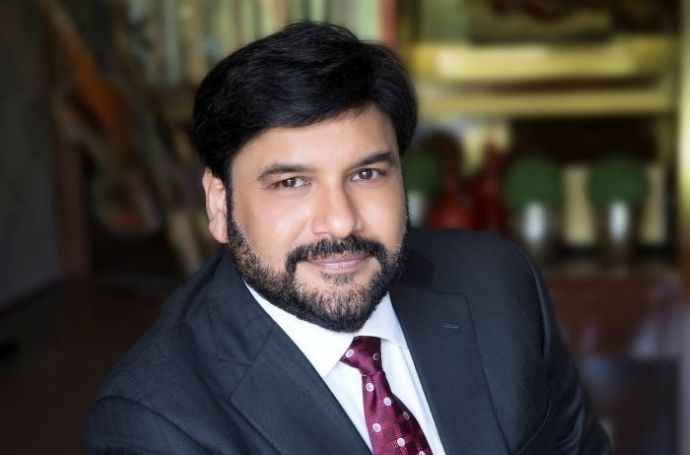


By Dr. Jeny Rapheal
Mental health and well-being are outcomes of awareness and mindfulness. Whether it is developing a positive thinking style, habit formation, counseling, spiritual practices, learning new skills, meditation, or growing in gratitude and compassion—each of these is rooted in the principle of mindfulness.
What is the fundamental ingredient of any clinically concerted movement? The expansion of human consciousness, orchestrated by evolution, is a relentless and independent agenda of creation. Whether you like it or not, you are inevitably drawn into it. Of course, you may resist this call for expansion of awareness and consciousness, but only at the cost of your well-being and equanimity of mind. Once you wholeheartedly embrace this agenda of creation and acknowledge it as an indispensable path, liberation from the chains of ignorance and pain is assured.
Consider any action, behavior, or thought that may be described as “sublime,” “excellent,” or “exemplary.” A closer observation reveals that the individual behind such actions possesses a certain degree of self-awareness. This quality is often absent in those who live aimlessly, remain content with superficial ways of living, or prefer drifting through life rather than consciously navigating it.
In the coming decades, lessons in mindfulness will gain significant momentum. As the science of the mind gradually evolves, it is increasingly evident that the expansion of human consciousness—guided by cosmic evolution—is possible only through mindfulness.
Introducing Mindfulness in Schools
According to the American Psychological Association (APA), mindfulness is a state, not a trait. It can be cultivated through practices such as meditation, but it is not synonymous with them.
If mindfulness is the fundamental ingredient that promises success and well-being, why not plant its seeds in young minds? Implementing mindfulness in educational institutions does not require significant investment or infrastructure. What is needed is a teacher who can help students understand that there are two ways to live each day—with awareness or without it—and who can demonstrate the cognitive, emotional, intellectual, and neurological benefits of mindful living.
Importantly, students must have the freedom to choose. Freedom of choice is essential for developing mindfulness. It cannot be imposed; it can only be introduced as a possibility and gently encouraged.
Students need not adhere to a single technique to cultivate mindfulness. While meditation is a powerful tool, activities such as music, art, and drawing can serve the same purpose—provided they are approached with awareness. Even simple acts like walking, talking, eating, and observing can become tools for mindfulness. Ultimately, it is not the activity itself but the degree of awareness brought to it that nurtures mindfulness.
Learning with the Mind vs. Mindfulness
The ability to evoke and sustain awareness through conscious choice prepares an individual for experiential learning. Broadly, there are two levels of learning: intellectual and experiential.
Intellectual learning involves acquiring and memorizing information through analytical and repetitive mental processes. In contrast, experiential learning engages the learner fully—intellectually, physically, and emotionally. In such cases, the learner becomes deeply absorbed in the learning context, content, and activities.
Most academic environments primarily foster intellectual learning. However, if these contexts are transformed into experiential learning opportunities, the challenge of motivating students would significantly diminish.
Only experiential learning contributes meaningfully to personal enrichment and well-being. Knowledge and skills alone do not necessarily translate into life-enhancing outcomes; they may simply aid in survival, much like lubrication improves a machine’s functioning. Intellectual exercises, while useful, do not always impact life in its entirety.
Therefore, incorporating mindfulness into the school curriculum is not merely a suggestion for reform—it is a necessity. Sustained attention and mindfulness are fundamental requirements for meaningful learning experiences.
The objective of the Indian education system—holistic development of the child—will remain unattainable u nless we actively cultivate the uniquely human capacity for self-awareness. Recognizing and nurturing this inner awareness is essential for true growth.
Hence, let us be mindful of the importance of mindfulness.
Author is a mathematics teacher in Coimbatore with PhD in Psychology. This post first appeared on this site a few years back.