
The Indian School of Development Management (ISDM) and Professional Assistance for Development Action (PRADAN) on June 15 launched two new social impact measuring frameworks—ISDM’s Development Management-anchored Social Impact Measurement and Management (SIMM) and PRADAN’s Rural Development Impact Framework (RDIF) at a joint event in New Delhi. The launches signal a shift in the conversation: from attribution to contribution, from projects to places, from reporting to learning. Both frameworks are a starting point, designed to be tested and strengthened by the practitioners who use them.
Titled Rethinking Impact: From Metrics to Meaning, a one-day convening at India brought together leaders across funding, implementation, research, and policy to confront a stubborn problem at the heart of India’s development sector: that measuring impact and actually enabling it remain two very different things. At the centre of the day were two frameworks built from years of field engagement. ISDM’s Development Management-anchored Social Impact Measurement and Management (SIMM) approach challenges the sector’s prevailing model: where indicators are selected to satisfy funders, evaluations happen after programs conclude, and data rarely feeds back into how programs are actually run. It proposes a shift: from measurement as a reporting obligation to measurement as a tool for learning and decision-making, built into implementation from the start.
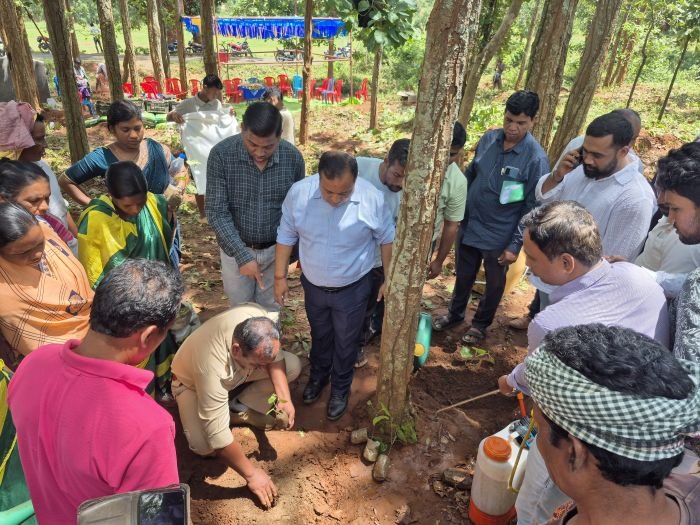
PRADAN’s Rural Development Impact Framework (RDIF) makes a parallel argument– that the sector needs to move from asking ‘what impact did we cause?’ to ‘how did we contribute to the process of change?’ Applied to PRADAN’s decades of work in Gumla and Dhamtari, the framework shows that the change which accumulates over years of sustained community engagement, in livelihoods, in women’s collective power, in how communities relate to the state, is far more than any single project or organisation can capture or claim credit for.
The convening drew practitioners from CSR foundations, implementing organisations, MEL firms, academic institutions, and policy bodies for a day of provocations, framework launches, panel discussions, hands-on working sessions, and a mixed-cohort design lab. Speakers included voices from philanthropy, civil society, and research organisations.
Reflecting on the event, Dr Tushaar Shah, former Director, Institute of Rural Management Anand, said “When a development organisation spends decades in a region, it stops making sense to evaluate a project– you have to evaluate the place, and the organisation’s relationship with it. That is the core shift these frameworks propose, and it is long overdue. The real test of any evaluation is not merely the quality of the report, but whether it changes what anyone does next.”
Development funding in India is growing, but more money alone won’t solve the complexities of socio-economic challenges. How impact is defined and measured matters enormously: what gets measured gets funded, and what gets funded gets scaled– shaping the trajectory of millions of lives. Consider a typical dashboard for a rural livelihoods program: 120 SHGs formed, 2,400 women trained, 78% bank accounts opened. These numbers tell funders what was done but don’t say enough about what actually changed– for whom, why, and whether it will last.
This is not a data question; it is a governance and management one. When measurement is embedded in implementation, it becomes a tool for real decisions– where to direct resources, which approaches to scale, when to course-correct. Currently, communities are not a part of the design and planning process when it comes to programs. Adaptation during implementation is treated as deviation rather than good management. And measurement serves funders rather than the people programs are meant to serve.
Saroj Kumar Mahapatra, Executive Director, PRADAN, said, “Impact of developmental work should be measured on a year on year basis and should not be seen as a one-time affair. The sector needs evaluation frameworks that are honest about grassroots-complexities and can hold the complexities of real development work without flattening it into numbers that look clean, but say little. What works, for whom, and for which context remains at the core of Rural Development Impact Framework.”
“For too long, funders and Social Purpose Organizations have worked towards the same goals while often using different frameworks and expectations for defining impact. The SIMM Approach and RDI Framework are not a finished answer but a living piece of work – an invitation to contextualise our understanding of impact to the complexities of real-world social change and to build a shared language for the sector,” said Trisha Verma, Director, Global Knowledge Hub, ISDM. “By bringing together leaders from philanthropy, civil society, and academia, this event marks the beginning of a collective effort to shape, test, and strengthen this thinking together. Our hope is that it evolves as a public good that enables better decisions, stronger partnerships, and ultimately, greater social impact”, she added.
ISDM and PRADAN invite social sector professionals, funders, and changemakers across India to engage with this work: to bring their contexts, their frictions, and their field realities to a growing community of practice committed to building impact thinking that actually reflects how change happens.