
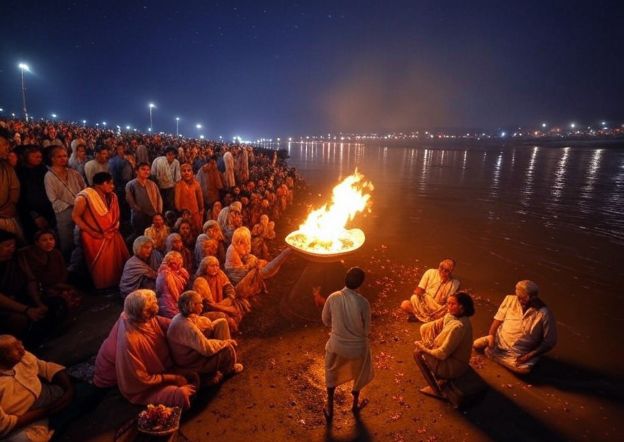
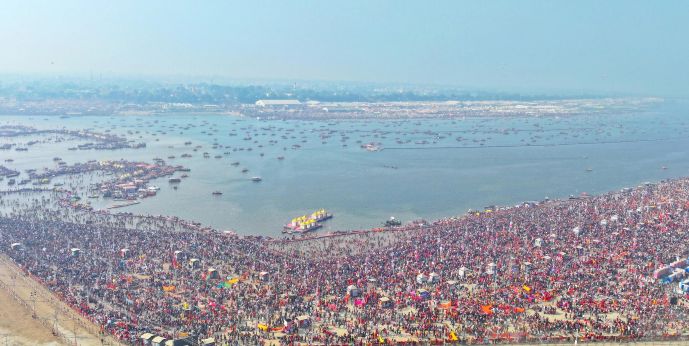
The 45-day-long Maha Kumbh 2025, one of the world’s largest spiritual gatherings, commenced on January 13, 2025, in Prayagraj. Timed with the auspicious occasion of Paush Purnima, the event has drawn millions of devotees from around the globe to the sacred confluence of the Ganga, Yamuna, and Saraswati rivers—known as the Sangam—for a holy dip. Occurring only once every 144 years, the Maha Kumbh 2025 is anticipated to host an estimated 45 crore attendees, including 15 lakh foreign tourists, solidifying its place as the largest gathering on the planet.
Rooted in ancient mythology and blending spirituality, astronomy, rituals, and cultural traditions, the Kumbh Mela stands as a timeless testament to faith and knowledge. Its celestial timing reflects its mythological origins in the Samudra Manthan, or the churning of the cosmic ocean. This event, described in the Rigveda, symbolizes the emergence of a divine pot (Kumbh) containing the nectar of immortality (amrita). Legend holds that drops of this nectar fell at four earthly locations, marking the present-day Kumbh Mela sites. The festival’s timing is also astrologically significant, aligning with the Sun’s transition into Capricorn and the positioning of Jupiter in Aries.
The Symbolism of the Sacred Pot
At the spiritual heart of the Maha Kumbh lies the Kumbh, or sacred pot. This vessel represents not just the celestial story of the elixir but also the human body as a vessel for spiritual awakening. Pilgrims believe that immersing themselves in the sacred waters purifies the mind and renews the soul, symbolizing a journey of self-exploration and spiritual rebirth. The flowing rivers, steeped in millennia of tradition, become conduits for pilgrims to reconnect with their spiritual essence.
Rituals and Gatherings of Maha Kumbh 2025
The Maha Kumbh is marked by its grand bathing rituals, where devotees immerse themselves in the sacred waters to cleanse their souls. But beyond the bathing, the festival is rich with spiritual and social activities. Religious assemblies featuring debates and discourses are held by renowned saints and sages, with Vedic mantras chanted and Yajnas performed to seek divine blessings. Donations to the poor, ascetics, and saints—ranging from food and clothing to precious metals—are a significant aspect of the festival, embodying the spirit of generosity and unity.
The Maha Kumbh also serves as a vibrant tapestry of cultural unity, bringing together people from diverse backgrounds to celebrate a shared spirituality. It is a living embodiment of the principle of “unity in diversity,” fostering bonds that transcend societal boundaries.
Progressive Participation and Inclusivity
Mahakumbh 2025 sees participation from 13 Akharas, including the Kinnar Akhara, Dashnam Sanyasini Akhara, and women’s Akharas. These groups symbolize the festival’s evolving approach toward gender equality and inclusivity, promoting unity across caste, religion, and cultural diversity. Beyond religious practices, the event serves as a platform to showcase India’s rich cultural heritage and economic prosperity.
A Historic and Economic Legacy
The earliest references to a pilgrimage akin to the Maha Kumbh Mela appear in the Rigveda, highlighting the festival’s deep historical roots. The medieval period saw royal patronage elevate the Kumbh to a grand spectacle, with contributions from dynasties like the Cholas, Vijayanagar rulers, the Delhi Sultanate, and the Mughals. Emperor Akbar’s alliance with the Naga Sadhus in 1565 at Prayag is one of the most notable historical moments, symbolizing religious harmony and inclusivity. British colonial administrators, such as James Prinsep, documented the festival in the 19th century, offering invaluable insights into its scale and cultural significance.
In terms of global attendance, Maha Kumbh 2025 surpasses events like the Rio Carnival (70 lakh attendees), Haj (25 lakh), and Oktoberfest (72 lakh), with an expected 45 crore participants. This unprecedented scale highlights its global cultural and spiritual significance.
Economically, Maha Kumbh 2025 is set to deliver a major boost, contributing up to Rs. 2 lakh crore to India’s economy and potentially increasing Uttar Pradesh’s GDP by over 1%. Trade in daily essentials is projected to reach Rs. 17,310 crore, while the hotel and travel sectors are estimated to generate Rs. 2,800 crore. Religious materials and flower trade alone are expected to contribute Rs. 2,000 crore and Rs. 800 crore, respectively.
A Timeless Spiritual Odyssey
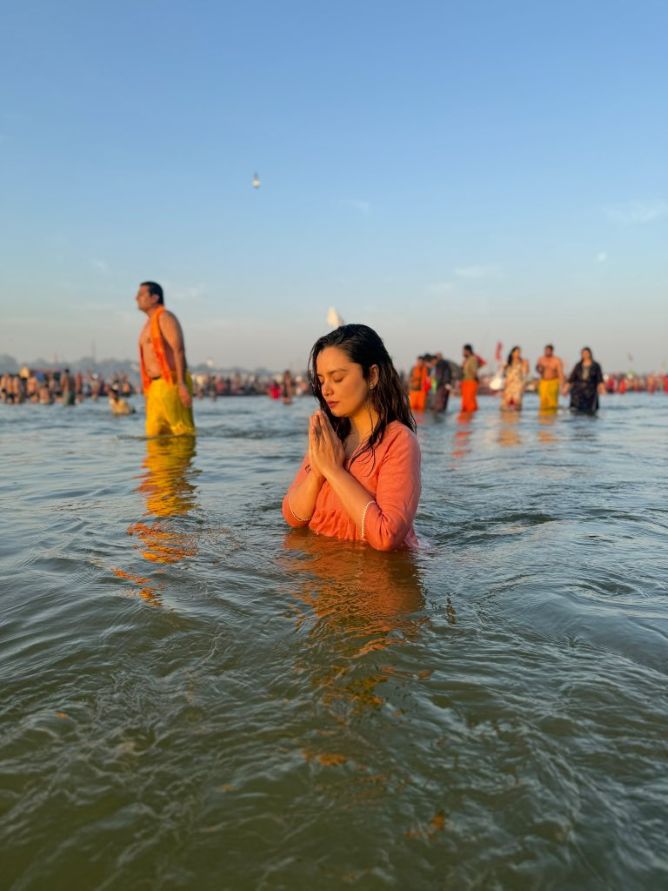
As the sacred sands of the Sangam continue to welcome millions of devotees, the Maha Kumbh 2025 promises to be an unparalleled spiritual journey. From its mythological origins to its evolving cultural traditions, the festival is an invitation to reconnect with one’s roots and experience the timeless wisdom of Sanatan Dharma. It stands as a grand confluence of mythology, history, and spirituality, offering a profound celebration of faith and transcendence.
Whether in the divine blessings of saints or the mythological legacy of Maharishi Durvasa, the Maha Kumbh embodies the miracles of life and devotion. In a world marked by divisions, it serves as a powerful reminder of the shared quest for spiritual truth—a journey that unites humanity under the vast, sacred skies of Prayagraj. Maha Kumbh concludes on Feb 26.