
The National Independent Schools Alliance (NISA), which claims to represent over one lakh Budget Private Schools (BPS) across India, has written to the Prime Minister seeking fundamental systemic reforms to address recurring examination paper leaks, declining school education standards, and their adverse impact on students and the overall quality of education.
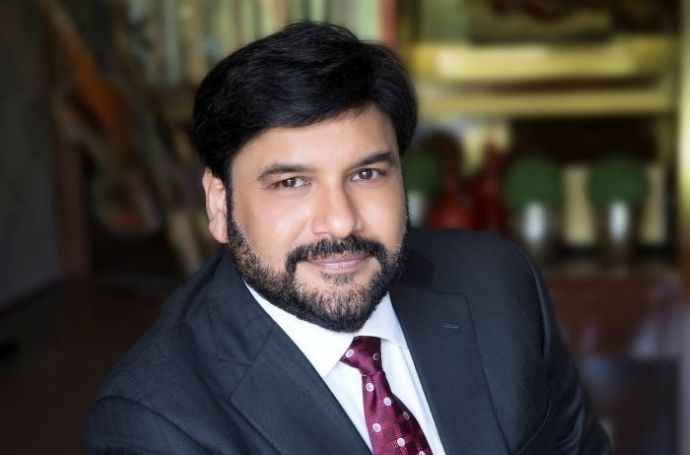
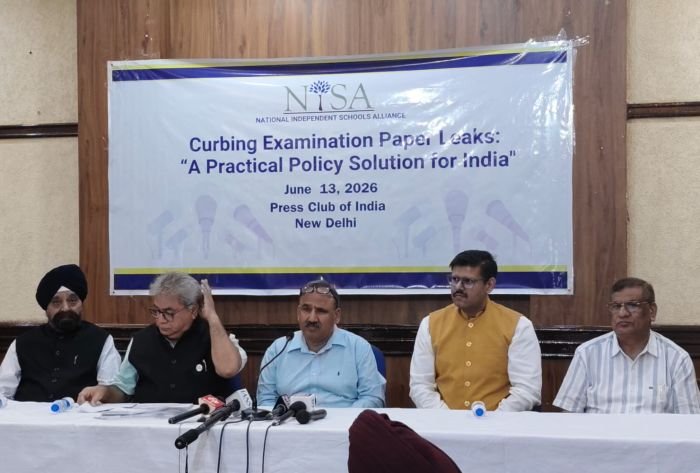
Sharing details of the alliance’s recommendations at a press conference in New Delhi on June 13, NISA President Dr. Kulbhushan Sharma said the organization has highlighted the need to create a level playing field for all students, irrespective of their economic background or type of schooling, in competitive entrance examinations for admission to higher education institutions. The alliance also raised concerns about the growing influence of the coaching industry and its detrimental effect on holistic school education.
According to NISA, the coaching industry—estimated to be worth over ₹1 lakh crore and larger than the Union Education Budget—has a vested interest in maintaining the current examination ecosystem. The alliance alleged that a perception has been deliberately created among students and parents that cracking competitive entrance examinations is impossible without coaching, leading many families to spend heavily on such services.
To reduce the dependence on coaching, NISA has recommended shifting the January session of JEE Main to after the completion of annual school examinations, ensuring that school academics retain their relevance and are not compromised.
The alliance has also proposed a three-stage selection process for NEET to make the examination system more secure, merit-based, and resistant to leaks. Under its proposal, students would first be shortlisted on the basis of Class XII board examination results. Candidates up to five times the number of available seats would then be allowed to appear for a screening test similar to JEE Main. Those who qualify would subsequently take a descriptive examination, on the lines of the UPSC model. NISA believes this approach would reward genuine merit, strengthen the quality of medical education, and eliminate many of the malpractices currently associated with the examination process.
Addressing the role of the coaching industry, Dr. Sharma said, “Illegal coaching centres and misleading advertisements are convincing many parents that coaching guarantees success. In reality, their success rate is barely 1–2 percent, while the vast majority of paying parents merely end up financing the system. The concept of dummy schools has been invented solely to exploit gullible parents.”
He further argued that question papers for high-stakes entrance examinations should be closely aligned with school curricula and NCERT textbooks so that school education alone is sufficient preparation. This, he said, would help eliminate the widespread belief that coaching is indispensable for success. He also said biometric attendance in schools can be introduced to curb dummy schooling.
Speaking on the impact of current policies on school education, Dr. Dilip Modi, Joint Secretary of NISA, said, “Today, the exit certification earned after 15 years of schooling carries little value. In many cases, it is not even considered sufficient for admission to an ordinary college. As a result, the importance of schools and education boards continues to decline.”
Dr. Modi noted that the Supreme Court had approved a normalization formula for different education boards several years ago and argued that it should now be implemented nationally. “If internal assessment and practical examination marks are excluded for the purpose of preparing merit lists, the final board examinations can serve as a common basis for ranking students after applying a normalization formula. This would recognize genuine talent while restoring the importance of schools and boards,” he said.
NISA also criticized the Central Board of Secondary Education (CBSE) for expanding its role beyond that of an examining body and becoming increasingly elitist in its approach. The alliance argued that recognition granted by a state government should be sufficient for a school’s affiliation to an education board and that schools should be free to choose their preferred board.
Lakshay Chhabria, a founding member of NISA, highlighted the difficulties faced by hundreds of budget private schools in Delhi that have no practical alternative to CBSE affiliation but are unable to secure it due to various regulatory requirements. “This has remained an unresolved issue for years and requires urgent attention,” he said.
Commenting on the OSM controversy, NISA demanded that students who have applied for re-evaluation should be awarded marks based on the average of the two assessments, similar to the approach adopted during the Covid period, so that they do not suffer further delays.
Dr. Kulbhushan Sharma, however, did not support demands for the resignation of Union Education Minister Dharmendra Pradhan. “The resignation of an individual will not solve the deeper problems within the system. What is needed is structural reform and fundamental change. Therefore, we do not support the demand,” he said.