

Should the need arise in future for a transition from face-to-face to online learning, then, how different should it be from the one because of pandemic, we just went through after a necessary struggle of two years. In particular the social and ethical issues associated with the pandemic-induced online mode of learning among students and teachers of higher education in India generated a lot of debate and also holds a lesson for the future.
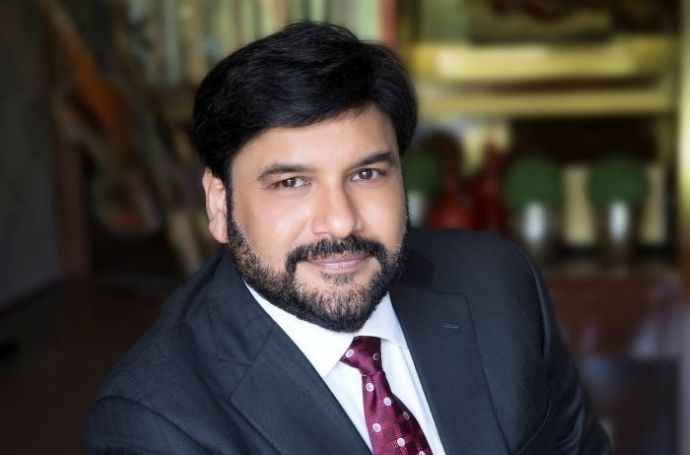
 The trio of Venkatesha Murthy, Assistant Professor, School of Management and Entrepreneurship, IIT Jodhpur and Dr. Sonali Bhattacharya and Dr. Shubhasheesh Bhattacharya from Symbiosis International University, Pune have recently published a study on this aspect in the Asian Journal of Business Ethics, which recommends learners can be provided self-paced, self-directed online lessons in the form of Massive Open Online Courses (MOOCs) or faculty-created asynchronous videos. Field visits and self-learning through collaboration can also be fostered for hybrid approaches in case a situation arises in future.
The understanding from this research points to the need for educational institutions and faculty to gain technology know-how to enable seamless transition from face-to-face to online learning, should the need arise in future. The study’s findings also reiterated the need for an empathetic relationship between learners and educators.
The drawbacks identified in the past online-mode of education in social and ethical spheres though interesting, needed a serious research now provided by these two researchers. While online learning allows for the incorporation of useful features like audio-visual inputs and debates and role plays, the ethical dilemma was in the enforcement of compulsory classroom participation. Live camera feed was often considered an intrusion into the learner’s private space, causing discomfort to the learner, their family members, and other participants in the virtual classroom. Similarly, the privacy of educators was also a sensitive issue, as many teachers worried about public release of their videos and caricatures in some unpleasant way.
Another conundrum was the present-but-absent nature of the online classroom that was associated with long hours of screen time and absence of the teacher “in the flesh”. Yet another ethical problem was the higher incidences of and opportunities for cheating during assessments and exams than are possible in regular classrooms. The only way this problem can be overcome is by making the assessments application-based.
While general observations indicate vastly complex manoeuvring into online learning, a variation in some disciplines could be noticed. For example, business school learners reported an increased opportunity to interact with industrial top-notch through virtual mode, which may not have been possible in regular classrooms. In the areas of science, however, educators found it hard to make learners understand some subjects like anatomy. Although scientific experiments could be telecast live, the absence of hands-on experimental experience was a serious drawback to the sciences.
Studies on the nature and outcomes of the pandemic-induced online learning process are not trivial because of the complicated interplay of a variety of factors. In India, the outcomes of online education are complicated due to the factors including the large number of learners (more than 30 million), poor internet connectivity in many places, and non-availability of private learning spaces at home for many learners.
To tackle this complex subject, the research team employed a qualitative analysis approach with a thematic framework to collect data on online learning, and to understand the socio-psychological and ethical challenges to the online learning process. The findings of the team are pivotal to understanding where the problems lie, which helps in planning better, approaches in the future, in cases of such emergencies.
Dr Venkatesha Murthy, said, “We have captured the ethical nuances of this new reality by juxtaposing the lived experiences of the two key stakeholders (learners and educators) and also captured the phenomena across multiple academic disciplines.”