
By Arun Prakash, Founder & CEO GUVI
There are millions of Indian youth who lack self-esteem because of their inability to converse fluently in English. This is also limiting them from the necessary professional exposure. According to studies, only 17% of the global population is capable of speaking two or more languages. This has led to a linguistic divide among the mass, where talent has been side-lined, and particular emphasis has been placed on an individual’s ability to speak in a specific language. This has created a barrier for millions of talented individuals, as they are unable to join the global workforce and showcase their true value and pursue excellence.
Historically, writing began in India much before other parts of the world over 4,000 years ago and has never seen any breakdowns. The official data from the Government of India suggests that our country boasts of at least 1,652 languages and numerous dialects. The flow of knowledge through these vernacular languages is as ancient as it can be and can’t be ignored as the Indian subcontinent comprising of almost 3% of the total global landmass has a significant 16% of the global population.
However, the colonial past has resulted in the monopoly of select few languages as the tools of official/business communication thereby putting a lot of vernacular language speakers at a disadvantage not only in India but around the world. The fact that vast majority of the Indian education domain has historically been driven by vernacular languages can’t be simply ignored. This is because of India’s status as a combination of numerous languages that make up different communities and regions.
Advantages of vernacular language in education
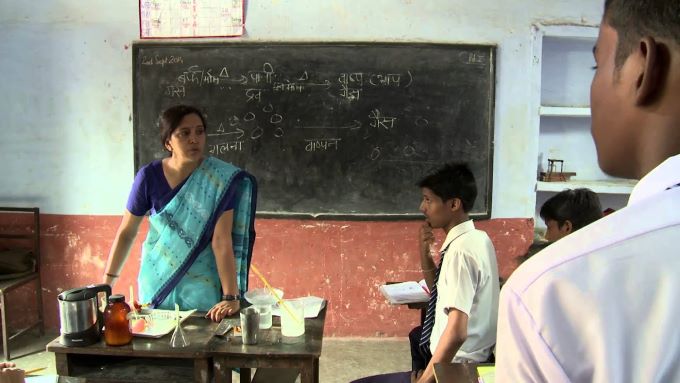
For centuries, English has been treated as a symbol of the elite in India, and the fee structure at English medium schools further bolsters the notion. This is why the importance of vernacular languages has been critical, as they promote inclusivity. Young learners from rural regions with humble family earnings in any Indian state can learn through their mother tongue in local schools than they can spend in schools where English is the mode of education and communication.
The 2011 Census supports the theory, which revealed that English was the mother tongue of only 2.56 lakh individuals in a country with 1.2 billion population. In India, 528 million residents said Hindi was their first language, almost half of the national population at the time. Another survey found that only 3% of rural residents could speak English, compared to 12% of urban residents. It also found that 41% of the rich were capable of converse in English, whereas only 2% of the poor could match it. More data suggested that less than a third of Indian graduates could fluently communicate in English, highlighting the importance of vernacular languages in India.
Vernacular languages are far from only the carriers of ancient culture and communication tools. They also act as the enabler of societal coherence, inclusivity and cognitive development. In a country like India where communities are often defined by their distinctive languages (Tamil, Telugu, Kannada, Bengali etc.), the usage of vernacular languages in education that are spoken regularly by the young learners and members of their surroundings offer particular benefits. For example, Tamil has been used as the most dominant language in Tamil Nadu schools, whereas Bengali is used in most educational institutes in West Bengal.
Numerous similar studies have found that vernacular languages benefit learners from different backgrounds and regions, while enhancing their confidence and participation in a more professional setting.
Importance of vernacular languages in modern society
Modern education stresses the end goal of churning talented professionals across domains, and learning a particular trade in the comfort of their mother tongue enables the youth to excel in the said field. Official data from the Indian government shows that only 12% of the population can speak English, with the majority of them using it as a second language. In the modern era where talented professionals with innovation and originality are at a premium, a society that enables vernacular languages in workplaces offers innumerable benefits to the country as a whole by making India a bold advocate of linguistic inclusivity.
On a positive note, integration of vernacular languages in the IT domain is already happening all around the world, and India has been one of the major influencers behind the effort. These vernacular languages are promoting inclusivity on the global stage.
Are vernacular languages a barrier to global inclusion?
Many feel that the dependence on vernacular languages in the education system is antagonizing Indian students from joining the global workforce. On the contrary, several developing countries are putting more emphasis on vernacular languages. For example, Canada, which has two official languages — English and French, emphasizes similar importance on both languages. In Europe, the vast majority of the continent is still using vernacular languages to teach their youth. In South America, the majority of the speakers communicate in Portuguese and Spanish, leaving little room for English in their educational institutes. Indian schools have historically used the same principles, but the rising trend is shifting.
In a typical Indian professional setting, there is no dearth of professionals communicating with less than professional fluency in the language. while the inability to communicate in any dominant language is making prospective talents go elsewhere.