
The researchers at the University of Dundee have received funding of £4.4 million to explore how our genes can be ‘video-edited’ to develop new drugs for cancer, neurodegeneration, and other diseases. Genes are the pieces of DNA that contain the information required to make different types of proteins that build and maintain living organisms. Alternative splicing enables the production of different messenger RNAs and proteins from a single gene.
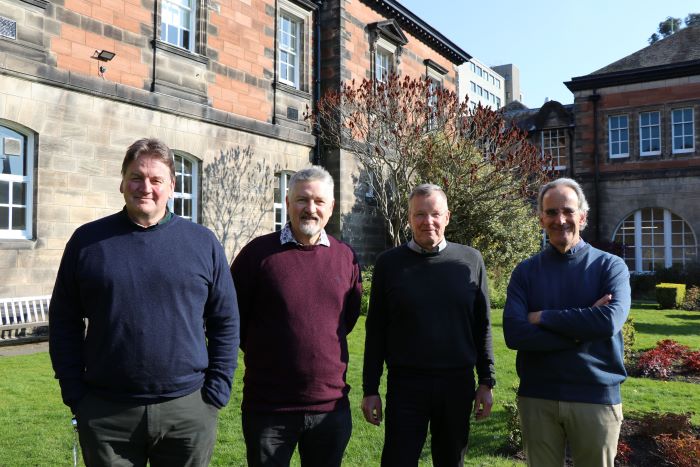
Professors David Gray and Angus Lamond, from the School of Life Sciences, University of Dundee will work with colleagues in Germany and Spain on the UNLEASH project. The project aims to produce drug-like small molecules that can control a process called alternative splicing (AS), known to play a key role in disease development. Both of the Dundee researchers have been awarded funding from UK Research and Innovation (UKRI) for UNLEASH, with their collaborators receiving a matching amount from the European Research Council (ERC).
The information in human genes is ‘split’, which allows a single gene to code for multiple proteins. If scientists can learn how to manipulate this process accurately, it will create opportunities to control how genes function and contribute to disease mechanisms. The team aims to precisely control this process to help pharmaceutical companies develop novel therapeutic approaches for treating human diseases. According to Professor Lamond, an analogy can be made with the more familiar process of video editing.
He further says, “The gene can be seen as the raw video footage that is captured, while the mRNA product that delivers the instructions for proteins is like edited video footage, where the editor has removed – spliced out – unwanted regions to form the final video story. Just as a skilled video editor can edit their raw footage in different ways to create more than one alternative video sequence, human genes can also be edited differently, thus creating alternative final mRNA products that code for different types of proteins. AS holds the key to understanding how our genes function and for the development of new therapeutics for a host of human diseases, many of which are known to alter the splicing process.”
For most genes to instruct the cell how to build proteins, DNA must first be copied into a related molecule known as RNA. Regions that are not essential for coding are spliced out to create mRNA, which assembles the information required to produce specific proteins. UNLEASH combines complementary expertise in chemical, structural, molecular, cellular, and systems biology, and Artificial Intelligence that is found at the University of Dundee, the Helmholtz Center in Munich, and Barcelona’s Center for Genomic Regulation.
Professor Gray added, “In principle, there are a wide array of cancers and neurodegenerative diseases we can treat if we can understand how to manipulate alternative splicing events. We know that alternative splicing is highly relevant to disease, but there is a knowledge gap that must be addressed if we are to develop these drugs. The project will generate many new compounds that will be useful for studying gene function and provide valuable new information to aid the rational design of small molecules targeting alternative splicing. It is hoped that this can lead to the development of new types of therapeutics for treating human diseases of current unmet need.”