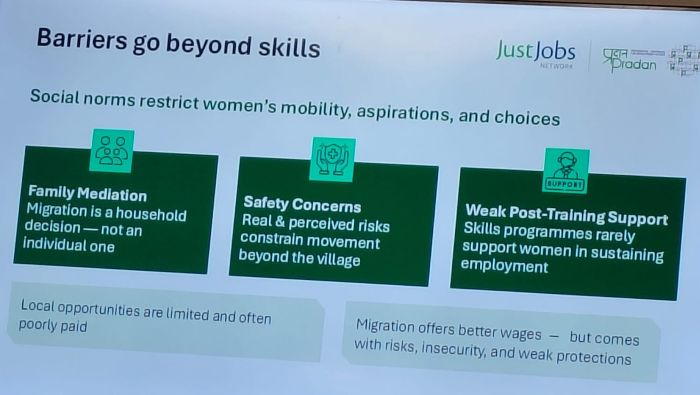

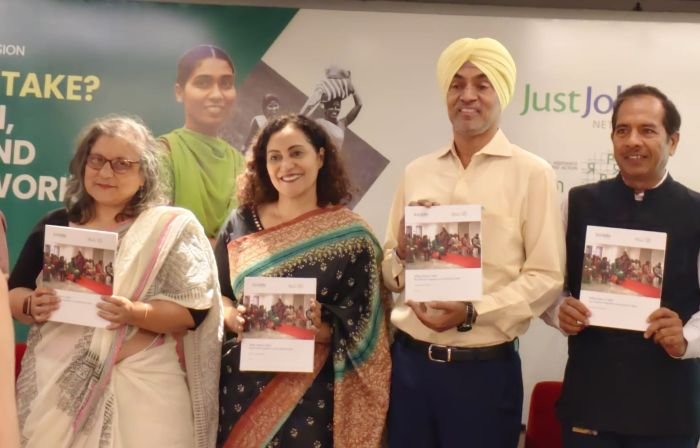
The next cycle of the Pradhan Mantri Kaushal Vikas Yojana (PMKVY), expected to roll out next year, will feature a dedicated entrepreneurship programme for women. The initiative aims to strengthen women-led enterprises and support rural women’s self-help groups, said Debashree Mukherjee, Secretary, Ministry of Skill Development and Entrepreneurship (MSDE), at the launch of the report What Does it Take? Rural Women, Migration, and the Road to Work by Noida-based JustJobs Network. This study reveals that successful employment transitions require more than technical training and skilling.
The report draws on field research conducted among stakeholders of PRADAN’s Youth Employment Program (EEMPOWER), including workers, families, community leaders, and officials. The study spans source regions in Odisha’s Rayagada district and destination hubs such as Coimbatore, Hosur, Tirupur (Tamil Nadu), and Bengaluru (Karnataka), covering 97 respondents in total.
Five key insights from the study:
Aspiration development is foundational: Short duration residential programmes focused on building self-awareness and confidence, aligning job opportunities with individual interests, introducing basic financial management and gender awareness, and providing exposure to role models help rural women envision formal employment as possible and legitimate.
Family consent is decisive: Migration for work remains a collective household decision. Transparency mechanisms, including exposure visits for parents, formal consent procedures, and group migration, are essential in securing family consent.
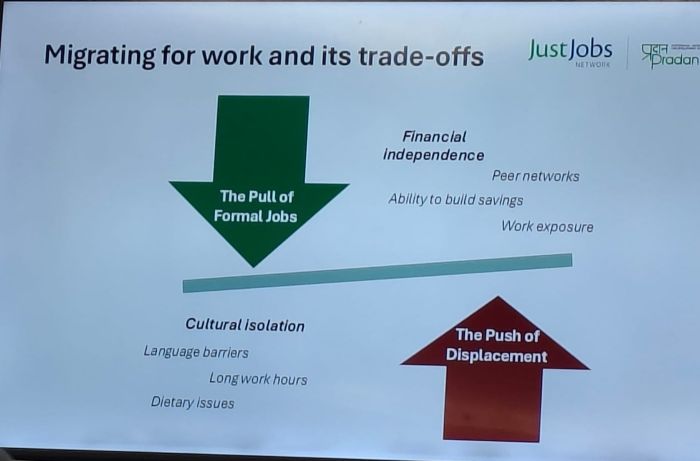
The transition to formal work involves cultural displacement: Beyond contracts and entitlements, women struggle with homesickness, language barriers, unfamiliar food, and isolation, factors that significantly influence whether they retain their jobs.
Retention depends on the support ecosystems: Post-placement follow-up, particularly during the first six to twelve months, is critical. Help desk calls, peer networks, and alumni meets reduce early dropout rates and build long-term stability.
Information gaps undermine formality: Despite formal contracts, workers often lack awareness about promotions, salary structures, documentation, and progression pathways, limiting their ability to leverage employment gains.
Professional Assistance for Development Action (PRADAN), headquartered in Delhi NCR, runs the Youth Employment Program across multiple states, including Odisha and Bihar. The initiative addresses structural barriers to labour force participation among marginalised rural women through three pathways—Education, Employment, and Enterprise Promotion (3E). Under its employment component, the EEMPOWER initiative, launched in Odisha in 2023, has mobilised 7,675 young women, helping them build aspirations, develop skills, and connect with formal employment opportunities.
The programme emphasises communication skills, confidence-building, financial literacy, and awareness of gender norms, while also facilitating job placements and providing post-placement support.
Key recommendations from the report include:
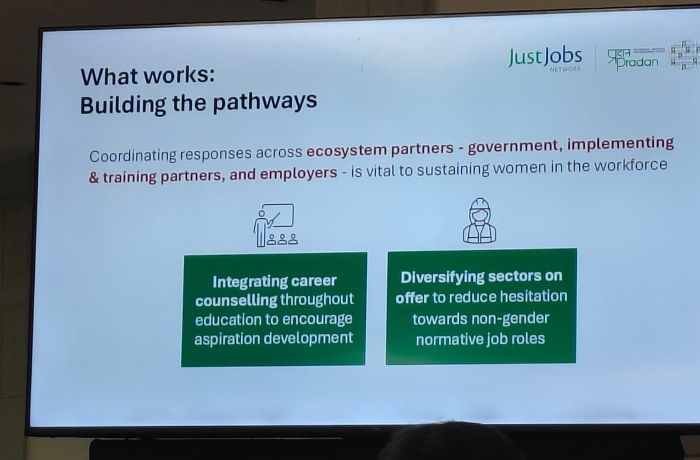
Targeted outreach in education: Integrate career counselling into schools and colleges to encourage early aspiration development, enabling informed decisions about educational and vocational pathways aligned with labour market opportunities.
Sectoral diversification: Encourage entry into nontraditional, higher-paying sectors beyond apparel and healthcare through diverse success stories, early technical exposure, and expanded placement options within career guidance efforts.
Structured mobility support: Implement pre migration exposure visits and deploy local support staff in destination cities. Focus intensively on the first three months, addressing issues related to accommodation, food, and homesickness while engaging with families in the origin states.
Migrant alumni networks: Formalise peer support platforms and alumni meets to strengthen information-sharing and job retention, and to create structured dialogue spaces between workers, employers, and state institutions.
Employer partnerships and safeguards: Establish rigorous due diligence processes, workplace compliance checks, clear contracts, and responsive grievance mechanisms to sustain women’s participation and build long-term trust.
Inter-governmental coordination: Strengthen alignment between central, state, and local programmes to streamline mobilisation, reduce duplication, and improve recruitment efficiency through effective data-sharing mechanisms.
Entrepreneurial pathways: Alongside wage employment, foster market-linked enterprises for rural young women via role models, financial literacy, credit access, and mentoring to position entrepreneurship as a growth-oriented option.
Voices:
Amarjeet Sinha, former Secretary, Ministry of Rural Development, stressed that lack of secondary education remains a key barrier to meaningful employment. He called for “second-chance” opportunities for youth aged 14–21, noting that nearly 75% either drop out or barely complete schooling. He proposed transforming secondary schools into community learning centres offering counselling, training, and career support after school hours. He also highlighted the untapped potential of women’s collectives under the Rural Livelihood Mission if better integrated with education, health, and nutrition systems.
Anurag Behar, CEO of Azim Premji Foundation and Chancellor of Azim Premji University, pointed to the deeper human dimensions of women’s employment journeys, cautioning that reducing such issues to numbers often obscures their complexity.