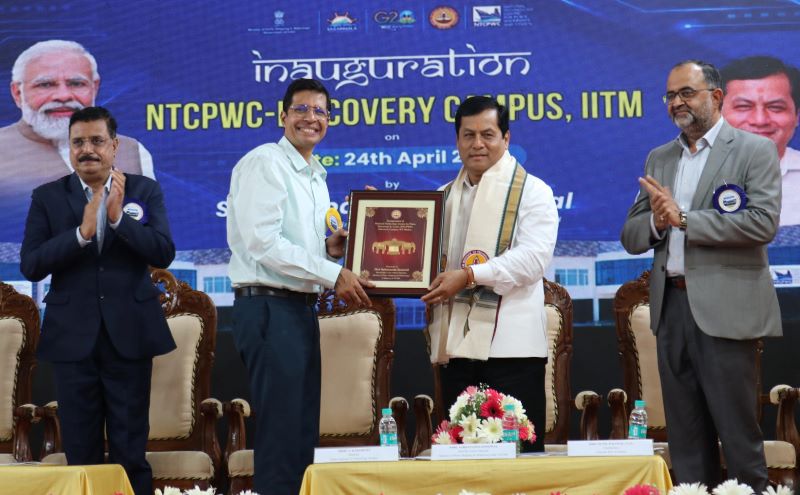

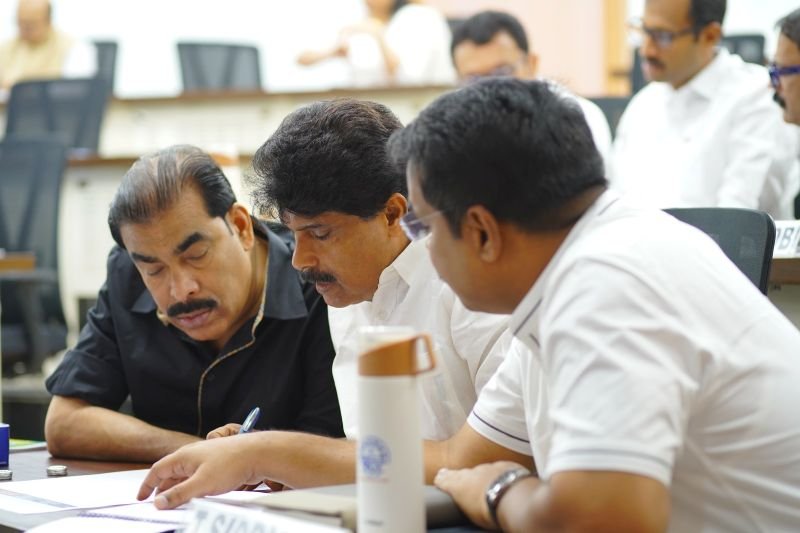
The two-day residential strategic leadership retreat ‘Reimagining Keralam’, organised by the Indian Institute of Management Kozhikode (IIM Kozhikode) for the Kerala Council of Ministers, was attended by the entire 21-member State Cabinet led by the Chief Minister Shri V. D. Satheesan on September 4-5 last week. The Ministers were also awarded a certificate from IIM Kozhikode for their participation in this classroom brain-storming exercise.
Building on the conversations of Day 1, which explored transformational leadership, healthcare and wellness, climate resilience, disaster preparedness and the science of making governance work, Day 2 broadened the dialogue to higher education, the silver economy, entrepreneurship and employment, sustainable growth and the global positioning of Keralam.
The Ministers actively engaged in team-building exercises and experiential learning, while appreciating the importance of community participation in making public policy and governance more effective. The discussions also drew on international examples of good governance and explored how global best practices could be adapted to Kerala’s context. They also inked their parting messages on Canvas on their wholesome experience on “From Cabinet to Class”.
Reflecting on the two-day retreat, Prof. Debashis Chatterjee, Director, IIM Kozhikode, said that the Cabinet’s enthusiasm, inquisitiveness and ability to connect ideas with policy and performance had made the engagement particularly meaningful.
“The two days of leadership learning on the theme of Reimagining Keralam have been immensely energising. The Honourable Chief Minister and the entire Cabinet participated with remarkable enthusiasm, responding positively and creatively to the questions and challenges discussed. From the blue and silver economies, Gen Z and migration to higher education, health, wellness, palliative care and Kerala’s global positioning, the discussions remained firmly focused on translating ideas into policy and performance. We are proud that IIM Kozhikode could support Kerala’s leadership in this collective endeavour for the larger public good.”
A key focus of Day 2 was “Towards Excellence in Higher Education: Building Keralam as a Destination”, led by Prof. Satish Krishnan, Prof. Sreejesh S, Prof. Devaprasad M, Prof. Ankur Jain and Prof. Silpa Satheesh. The session examined how Keralam can become a destination that talented young people actively choose for education, careers and their future. Moving beyond vacant seats, the discussion focused on student choice, academic quality, career pathways, industry and research exposure, and the larger proposition of making Keralam a place where young people want to stay, return and come.
The silver economy was explored through “The Care Ledger”, a management game led by Prof. Priya Nair and Prof. Deepa Sethi. Using three geriatric-care cases, Ministers examined choices around care infrastructure, workforce, technology, social protection and local delivery, while considering how responsibility could be shared among the State, families, a contributory fund and the market. The exercise highlighted the challenge of creating an equitable and sustainable eldercare system while protecting vulnerable sections and family caregivers.
The session “Prosperity with a Purpose”, led by Prof. Venkataraman S, Prof. Mridul Saggar and Prof. Vipin Veetil, explored a focused growth strategy for Puthuyuga Keralam. The discussion identified areas where Kerala could leverage its distinctive strengths, including education, plantations and agroforestry, health and wellness, and eco-tourism, while emphasising environmentally and socially responsible growth. The faculty also explored innovative ways of financing growth beyond conventional budgetary limitations by engaging the market around a credible sustainable growth story.
Kerala’s employment and entrepreneurship challenge was examined by Prof. Arqum Mateen, Prof. Ashutosh Sarkar and Prof. Nycil George in a session on creating jobs, nurturing entrepreneurship and closing skill gaps. The discussion highlighted Kerala’s paradox of exporting talent while importing labour, and the need for tailored interventions for different categories of potential job-makers—from graduates and returning technocrats to farmers and rural entrepreneurs. The faculty stressed the importance of stronger ecosystems for capital, mentoring and market access to create a lasting culture of entrepreneurship.
The concluding session, led by Prof. Rajesh Upadhyayula, Prof. Gladys S and Prof. Aishwarya Ramasundaram, brought together insights from across the retreat and asked the Cabinet to consider what Puthuyuga Keralam should offer and stand for to residents, industries and investors, tourists and the diaspora. Drawing on Singapore’s experience of building and reinforcing a global brand, the session examined the need for a common essence in how Keralam is positioned and communicated to different stakeholders.
The session also explored how Keralam could capture the imagination of its stakeholders while retaining the essence of God’s Own Country. Concluding the discussion, Prof. Debashis Chatterjee, Director, IIM Kozhikode, used the metaphor of a spectrum of colours coming together from a single source of light to underline the idea of a unified Keralam with a distinctive identity and purpose.
The two-day retreat brought together the State’s political leadership with IIM Kozhikode faculty and international experts in a structured dialogue designed to move beyond immediate administrative priorities towards the larger forces shaping Kerala’s future. As envisaged at the outset, the programme combined contemporary management thought, academic research, experiential learning and international perspectives to encourage strategic reflection and translate ideas into meaningful outcomes.
The successful conclusion of ‘Reimagining Keralam’ marks another significant chapter in IIM Kozhikode’s engagement with public policy and governance, and opens the possibility of continued academic collaboration with the Government of Kerala towards building a more prosperous, inclusive, resilient and globally connected Keralam.