
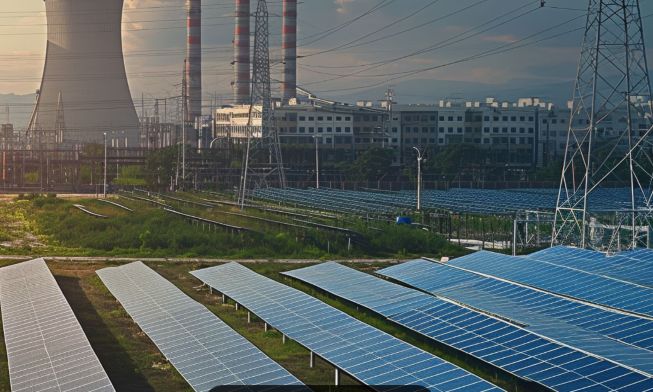
Punjab faces a challenge of reducing its reliance on fossil fuels and meeting increasing energy demands. By the fiscal year 2036, Punjab’s electricity demand will reach a staggering 1,26,347 million units (MU). A study by Center for Study of Science, Technology and Policy (CSTEP) titled, ‘Punjab Roadmap 2036: Clean Energy Transition’ analyzing the projected energy requirements of the state, says that the implementation of rooftop solar systems, combined with power-saving devices and increased electric vehicle presence on roads, will reduce peak demand to 26,167 MW. This reduction translates into a requirement for 7% fewer new power plants.
The expansion of urban areas, combined with industrial operations and the transition to electric technologies in agriculture and transportation, forms the foundational basis for this growth. Under Business-as-Usual (BAU) conditions, the potential maximum power demand could attain a level of 27,040 MW.
Punjab aims high with its energy goals but faces some hurdles in its move to clean power. The state lacks abundant solar and wind resources. It consumes a large amount of energy across farms, factories, and homes. In addition to this, due to extensive agricultural activities in the state there is limited availability of land for adoption of solar or wind energy solutions. These challenges make it difficult to transition to green energy sources and reduce reliance on fossil fuels.
The CSTEP report looks at Punjab’s energy future and lays out two possible paths:
- Standard Setup where green energy accounts for 46% of the energy mix, while fossil fuels make up the other 54%.
- Green Energy Setup, in which the incorporation of renewable energy jumps to 67% cutting down reliance on fossil fuels
While the Clean Energy Scenario requires higher investment at initial stage, it ensures long-term economic and environmental benefits for Punjab. Under this scenario, the state can reduce carbon emissions by 41% in FY 2036, with power purchase costs declining by an average of 7.3%.
To help this transition take place, the study outlines some key areas for focus and intervention, including:
- Identification of non-fertile land for large solar and wind projects with financial support for biomass energy
- Investment into energy storage of 7,451 MW capacity, including pumped-hydro and battery systems for balancing intermittent renewables
- Procurement of nuclear power of 2,637 MW for a firm power supply
- Programmes for expansion of rooftop solar, smart metering, efficient agricultural pumps, and energy conservation building code to reduce electricity consumption
- Incentive schemes such as concessional-interest green loans for energy-efficient buildings
The study also emphasises the need for targeted policy reforms and regulatory support to accelerate the transition toward clean energy, along with further studies on transmission and distribution planning. As Punjab moves toward a greener and more resilient energy future, these strategic interventions from CSTEP will be critical in building a cleaner and sustainable power sector for the state.