
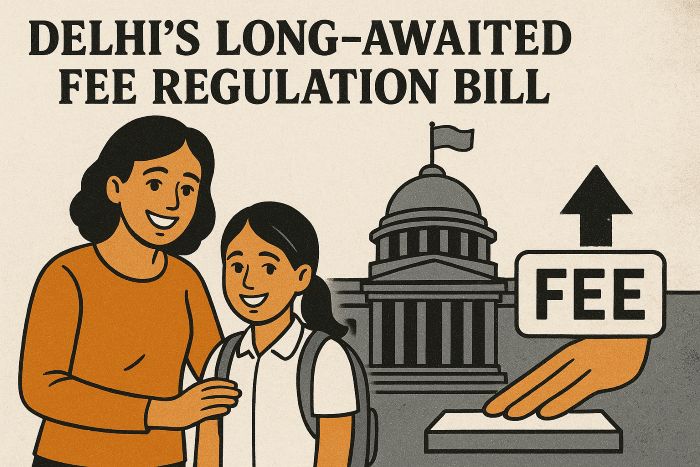
After 52 years of unchecked private school fee hikes, Delhi finally stands on the cusp of reform. The passage of the Delhi School Education (Transparency in Fixation and Regulation of Fees) Bill, 2025 in the Assembly on August 8 marks a turning point in the city’s education landscape. It is a long-overdue attempt to rein in arbitrary fee increases, restore transparency, and give parents a voice in decisions that affect their wallets and their children’s futures.
The Bill is ambitious. It requires private unaided schools to seek prior approval before any fee hike—permitted only once in three years. A three-tier regulatory mechanism, spanning school, district, and state levels, is designed to keep all sides in check, with parents, teachers, and officials represented. In a striking move, if even one of five parent representatives objects, the hike can be blocked. Penalties for unauthorized increases range from ₹1 lakh to ₹10 lakh, with provisions for derecognition or takeover for repeat offenders. Schools must also submit three-year fee proposals, justified by location, facilities, and expenditure, and are barred from penalizing students over fee disputes.
Yet the safeguards come with caveats. A 15% parental support threshold is required to lodge complaints—ostensibly to prevent frivolous grievances, but critics fear it will silence legitimate individual concerns. Civil court access is barred, pushing disputes into the newly created redressal system.
Chief Minister Rekha Gupta hails the Bill as a “breakthrough for middle-class families” and the end of a “52-year exile” for parents. Parent associations and some school leaders have cautiously welcomed its transparency measures. But the opposition is sharp: AAP’s Atishi calls it tilted towards private schools, pointing to the absence of mandatory audits and the risk of weakened accountability. Civic groups warn the high quorum requirement could bury genuine cases under procedural roadblocks, and the Bill remains silent on past fee excesses.
The history is instructive. Fee hikes—often near-annual and averaging 10%—were justified by neither quality upgrades nor cost evidence, breeding distrust. Some elite schools, emboldened by high demand, covertly demanded capitation fees and flouted EWS admission norms, shielded by legal delays and bureaucratic inaction. Parents, long without a collective platform, turned to the Aam Aadmi Party in frustration. AAP’s early attempts at legislative reform faltered without the Lieutenant Governor’s assent, leading to heavy-handed executive measures and a climate of hostility between schools and government. Compliance burdens mounted, school autonomy eroded, and new investments in Delhi’s private school sector dried up.
Now, with a BJP-led government promising a reset, this Bill seeks to balance oversight with operational freedom. It is a much-needed corrective—but only if vigilance remains constant. Delhi’s private education sector cannot be allowed to return to opaque practices, nor should regulation stifle innovation or quality.
For parents, the stakes are high: studies suggest nearly 40% of household income is spent on education. They deserve affordability, transparency, and quality—not just on paper, but in practice. The Bill is a promising first step. Its real measure will be in fair, swift enforcement and in proving that Delhi’s classrooms can be both accountable and aspirational.