
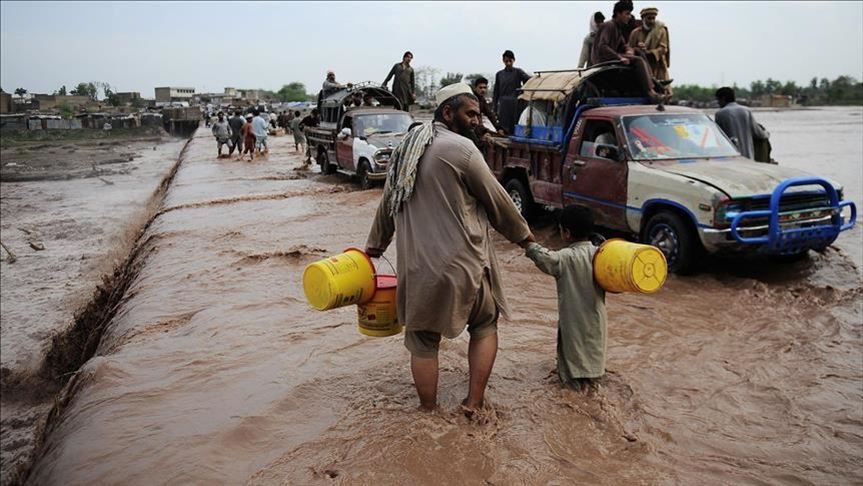
Short-distance migration, which accounts for the vast majority of migratory movements in the world, is crucial for climate change adaptation, according to new research from the University of East Anglia (UEA).
Contrary to common assumptions, most migratory movements are people moving short distances, largely due to economic, social and environmental factors, such as climate change.
A study of people living in the drylands of India and parts of Africa was carried out by UEA researchers in the School of International Development and with partners at the Indian Institute for Human Settlements, University of Cape Town, Cape Research Centre and the University of Ghana.
The paper, ‘Everyday mobility and changing livelihood trajectories: implications for vulnerability and adaptation in dryland regions’, is published today in a special issue on Everyday Adaptations in the journal Ecology and Society.
The research was led by Dr Mark Tebboth, Associate Professor in the Environment and International Development.
Dr Tebboth said: “Most attention is on international migration and how climate change will lead to huge numbers of people fleeing across borders, but actually the vast majority of people move short distances within their own country in order to take advantage of opportunities or in response to shocks and stresses in their lives.
“Supporting and enabling this migration will help people to continue to adapt the pressures in their lives.”
The research looked at drivers and outcomes of people’s mobility in the drylands of India, Ghana, Kenya and Namibia. Interviews were conducted during 2016 and 2017 with people living in those regions.
Drylands are the largest global biome, covering about 45 per cent of the Earth‛s land surface and accommodating more than a third of the globe‛s population.
Drylands are characterized by low and highly variable water availability and high temperatures. These regions are experiencing multiple pressures, including increasing rates of aridity and soil degradation; poorly planned and implemented development interventions; rapid population growth; historically high rates of poverty; poor communication infrastructure; and isolation from national centres of power – stressing livelihoods reliant on natural resources.
In India, the study sites were in North Karnataka’s Kolar district, where diversification to non-farm labour and daily commuting to Bangalore is common, and the Gulburga district, where agricultural livelihoods dominate and there has been historical outmigration to large cities.
In Kenya, the study sites were in Isiolo, the ‘gateway to the north’, where pastoralism, farming and tourism are common. Water is a scarce resource and this looks like it will become more severe in the future.
The study also included locations in the Upper West region of Ghana and the Omusati region of north-central Namibia.
Dr Tebboth said: “Far from being exceptional, this everyday mobility is ubiquitous and much removed from alarmist discourses of ‘climate migration‛ that views movement as solely climate-driven.
“In reality, it is normalized within lives and livelihoods and these movements are crucial in helping people to manage different shocks and stresses within their lives, including increasing climate variability. Most mobility, especially that in which environmental change is of some influence, is and will remain local.”
‘Everyday mobility and changing livelihood trajectories: implications for vulnerability and adaptation in dryland regions’, is published 8 March 2023 in a special issue on Everyday Adaptations in the journal Ecology and Society.