

Traditionally for decades, school education in India and elsewhere, has operated within a structured, teacher-led classroom model. Concepts are discussed in a fixed format, and examinations remain the primary assessment tool for measuring understanding. The success of this system has enabled scale and consistency across a large and diverse education landscape.
However, in the past some years, especially after Covid19 pandemic, this well-known model has changed. Technology use has increased and become an integrated part of how learning is now delivered. Fundamentally, the role of education itself has not changed; technological shift is simply about assisting the students in understanding, learning, and progressing. What is changing is the way teaching/learning is done. And Artificial Intelligence (AI) is now defining a clear shift.
EY estimates that more than 50% of higher education institutions in India are already using Artificial Intelligence (AI) in some form, whether for teaching support, content creation, or assessment. It will become true for schools as well in coming years. The significance in the matter lies in direction, rather than merely adoption. It is not as if AI is replacing the classroom, but it is an additional layer that is supporting the current education system.
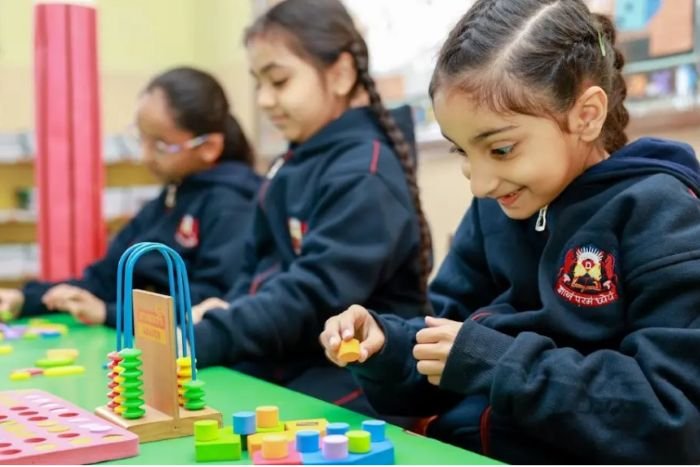
Learning in the age of AI is starting to feel different from the traditional classroom experience. In a conventional setup, everything moves at a fixed pace. The teacher continues with the lesson while the class moves forward together through the curriculum.
In parallel to this, however, earn and process ideas at their own pace, and there are naturally different learning rhythms in the same classroom. Over time, this leads to different kinds of learning experiences that teachers help and guide through their own experience and approach.
AI is helping add more flexibility to the learning experience. It enables a student to be provided with an alternative explanation or even extra practice according to their preferred learning method. Simultaneously, a student who is doing well can progress to a higher level and keep improving upon what they have learned. Even though such change does not seem very significant at first glance, its significance for the whole learning process will undoubtedly be valuable.
Teachers remain central to this setup. Their role becomes less about repeating explanations and more about guiding understanding. They can focus on improving communication, making interactions more interesting, and observing their thinking process.
A Shift in What Learning Is Meant to Do
Learning is gradually shifting from memorization toward application of knowledge. With the help of AI tools, education is becoming more of a continuous and practical affair with learners being provided with feedback during their learning process as opposed to after an entire academic semester.
What is emerging in India is a blended model. The classroom still feels familiar, but the learning experience within it is becoming more adaptive, more responsive, and closer to how students naturally understand and engage with ideas.
Despite this shift, let’s remember, traditional learning will always remain essential in instilling discipline and building strong theoretical foundations, and AI cannot replace it; it can only support the existing education system. So, nurture both the methods for optimal outcomes and good school cultures.