

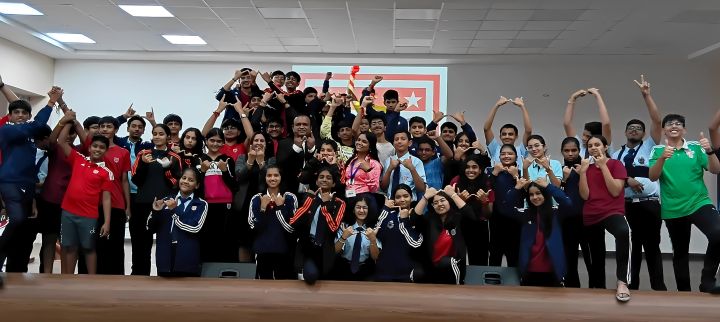
Secondary school education has long been recognized as a springboard for transition to higher education and the professional world. However, in the current context, it is increasingly evident that the K–12 education system, shaped by the National Education Policy (NEP) 2020, will play a decisive role in developing India’s future-ready workforce says Sasmita Mohanty
 To prepare students for their evolving roles as professionals, it is essential to innovate and embed inclusivity from the foundational learning stage itself. Before building advanced competencies, learners must acquire strong literacy and numeracy skills. The NEP 2020, through its mission initiative NIPUN Bharat, aims to ensure this by Grade 3 via stage-wise learning goals, optimal teacher–student ratios, and supportive resources. A solid foundation in literacy and numeracy enables learners to engage with more complex concepts later, nurturing confident, capable individuals.
Developing 21st-century competencies through purposeful pedagogies is key to moving beyond rote learning. Pedagogical approaches that promote creativity, analytical thinking, and resilience help students become adaptive thinkers equipped for real-world challenges. Educators must recognize that both foundational learning and competency-building will serve students well throughout their adult lives. Although the future of work remains uncertain, a strong educational grounding will ensure that students transition into those roles with confidence and adaptability.
Current research and policy frameworks highlight this direction:
- The Future of Jobs Report 2025 predicts that by 2030, nearly 39% of workplace skills will be redesigned. Beyond analytical thinking and creativity, social influence and emotional intelligence will be vital.
- NEP 2020 and the NCF-SE advocate for experiential, inquiry-based, and competency-driven pedagogies that emphasize critical thinking, collaboration, empathy, and a growth mindset from the earliest grades.
- Practical strategies such as project-based learning, interdisciplinary approaches, collaborative grouping, and growth mindset development foster valuable soft skills and real-world readiness.
AI, Robotics, and Personalized Learning
Technology integration has become indispensable in education. AI, Robotics, and Personalized Learning or in nutshell utilizing tech has become inevitable in education and if used optimally, it can radically improve the quality of education. Here is why:
- The global AI-in-education market is projected to grow at a CAGR of ~47% through 2030.
- Early exposure to coding, robotics, and AI literacy encourages computational thinking. Initiatives like Atal Tinkering Labs and school-based robotics programs are expanding rapidly.
- Platforms such as MindCraft (AI-based and rural-focused) demonstrate how personalized mentorship and adaptive learning can bridge learning gaps.
- National programs like SOAR (Skilling for AI Readiness) are simultaneously building AI literacy among students (Grades 6–12) and strengthening teacher capacity.
Promoting Early Vocational and Practical Skills
Encouraging Early Vocational and Practical Skills is important because aligning education with employment-relevant skills guarantees employability:
- Currently, only about 1% of Indian youth (ages 15–59) possess formal vocational training, far below global averages.
- States such as West Bengal, Andhra Pradesh, Karnataka, Punjab, Haryana, and Tamil Nadu have launched innovative vocational models in fields like AI, robotics, renewable energy, hospitality, and IT.
- From 2028, Uttar Pradesh will make vocational subjects mandatory in schools, linking coursework directly with internships to promote hands-on experience.
Fostering Mental Well-Being, Soft Skills, and Career Awareness
Then there is no denying that Academic training must coexist with emotional and career preparedness. This means developing Mental Well-Being, Soft Skills & Career Awareness alongside academics is a trend in scalping up mode:
- The CBSE Career Guidance Dashboard and Hub-and-Spoke Counselling Model (2025–26) provide structured career planning and mental health support.
- Delhi’s Happiness Curriculum (Nursery–Grade 8) cultivates social-emotional learning, problem-solving, mindfulness, and purpose—core attributes for future adaptability.
Encouraging Real-World Exposure and Volunteering
Encouraging Real-World Exposure & Volunteering is part of this emerging order as experience matters in bridging theory and practice. So as educators and school leaders we must be mindful of and make use of:
- The Vidyanjali initiative engages community volunteers and professionals to support co-scholastic learning in government schools.
- Programs like ICMR’s SHINE expose Grades 9–12 students to biomedical research, nurturing scientific inquiry and problem-solving.
- Schools such as Lexicon introduce entrepreneurship and coding from Grade 1, while Jaipuria School offers internships from Grade 9, enabling students to build digital portfolios and early professional experience.
Policy, Investment, and Infrastructure: Enablers of Transformation
Finally, any systemic change that is required for a transformative change involves Policy, Investment & Infrastructure. And we’re seeing it also around us:
- Karnataka’s SEP promotes bilingual instruction, a 2+8+4 system, and increased public investment favoring inclusion and early learning.
- Odisha is establishing 835 digital, STEM-enabled schools at the Gram Panchayat level, integrating vocational training and critical thinking.
- Telangana is introducing free, technology-driven coaching across government schools, with AI-powered learning platforms, STEM content, and NGO collaborations (e.g., Khan Academy, Physics Wallah).
- However, challenges remain—Uttarakhand’s partial NEP rollout and Tamil Nadu’s cautious reforms highlight the need for stronger implementation and teacher training.
Conclusion
By emphasizing foundational literacy and numeracy, fostering 21st-century competencies, and integrating technology, vocational training, and emotional well-being, India’s K–12 education system can truly prepare students for a dynamic future. Connecting education with industry exposure, internships, and skill certification will make learning relevant and employment-oriented. Simultaneously, embedding social-emotional learning, career guidance, and real-world experiences will ensure students are not only skilled but also resilient and purpose-driven.
With sound policy frameworks, teacher education, and digital infrastructure, India’s vast K–12 network has the potential to evolve into a powerful engine for nurturing innovative, adaptable, and future-ready professionals who will lead confidently in a rapidly changing global economy.
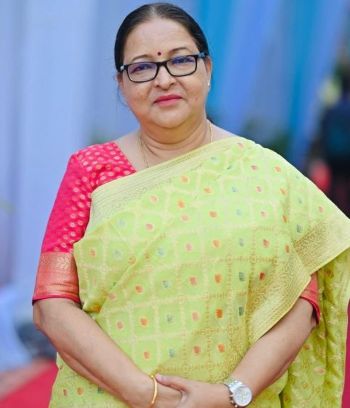
(The author is the Director-Principal at Sanjay Ghodawat International School, Pune)


