
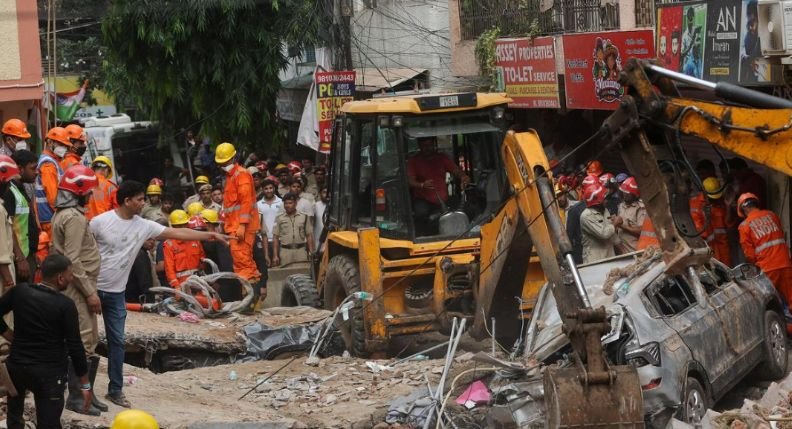
The catastrophic collapse of a building housing student PG (paying guest) accommodation near the South Campus of Delhi University in Satya Niketan on September 6, resulting in the loss of seven precious lives—as officially confirmed so far—and grievous injuries and fractures to several others, is an extremely serious matter. With an unspecified number of occupants still unaccounted for and feared trapped beneath the debris, the tragedy demands not only an in-depth and uncompromising investigation but also serious reflection on the larger issue of student housing itself.
Delhi University, a central university and one of the country’s most sought-after institutions of higher education, attracts students from across India. It is estimated that the university and its affiliated colleges together educate around 2.5 lakh students in an average year, with more than 50 per cent coming from outside Delhi. This means that well over one lakh students may require accommodation. Against this demand, however, the overall hostel capacity is estimated at only about 9,000. The vast majority of students requiring accommodation, therefore, have little option but to depend on private PGs, rented rooms and shared flats.
The September 6 tragedy has brought this issue into sharp focus. It is also a matter of accountability and possible negligence by civic and regulatory agencies. Reports suggest that the collapsed building lacked adequate structural strength and the required clearances, yet construction continued. As events increasingly indicate, this may not be an isolated case. Given the enormous market for student accommodation, similar clusters of PGs and rented buildings have mushroomed in several areas around colleges, universities and coaching centres.
Students and their families are paying heavily for this accommodation, with rents reportedly ranging from around Rs 16,000 for a bed to Rs 30,000 or more, depending on occupancy and facilities. Yet, the recent incident is only the latest in a series of mishaps involving unsafe buildings and student safety. The question, therefore, is not merely about this particular building, but about the larger ecosystem that has allowed such conditions to develop.
However, while most discussions are concentrating on the immediate questions of structural safety, civic negligence and accountability, another important factor also needs to be discussed: the larger consequences of CUET (Common University Entrance Test) and the increasingly centralised nature of university admissions.
The issue needs serious brainstorming. According to some critics, CUET has contributed to turning India into a country perpetually engaged in entrance examinations. More importantly, they argue, it has eroded university autonomy, diminished the significance of school-leaving examinations and contributed to an unprecedented displacement and migration of teenage students across the country. These developments bring with them a host of social, economic and emotional consequences.
Policy planners, it is often argued, remain disconnected from the realities of interactive learning and educational ecosystems at the grassroots. There is a tendency to rely on imported models and centralised systems without adequately examining whether the necessary infrastructure and social conditions exist for their successful implementation in India. The consequences are not limited to academic administration. Large-scale student migration can place enormous emotional and financial pressure on families and can contribute to concerns relating to student stress, mental health and other social vulnerabilities.
Delhi University itself has, over the past two years, experienced admission delays and thousands of vacant seats. It has had to explore alternative admission options and revise course combinations. At the same time, there is often a disconnect between official claims and realities on the ground.
For instance, official data may suggest that the pupil-teacher ratio in schools is below 30, yet there are instances of classrooms in Kendriya Vidyalayas accommodating more than 60 students. If not for absenteeism, there would barely be room to move in such classrooms. Yet, the system continues to celebrate statistical achievements and successful implementation.
Likewise, several academicians at Delhi University have pointed to the inadequacy of physical infrastructure and the need for its augmentation following the expansion of student intake, including the addition of 10 per cent seats under the EWS quota. However, judging by the available hostel capacity, little appears to have been done to create accommodation facilities proportionate to the growing student population.
The Satya Niketan tragedy is, therefore, certainly a wake-up call. It calls for a thorough reappraisal of student services, welfare and the larger architecture of higher education. Ensuring that students can access education safely and with dignity is a sacred responsibility of the entire system. First thing in this has to be being realistic and honest. Every component—universities, governments, civic agencies, regulators and policymakers—must now identify the weak points, take corrective measures and restore society’s confidence that the pursuit of education will not come at the cost of young lives.