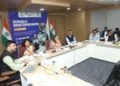


At a webinar titled, ‘Reaffirming the Right to Education in Challenging Times’ organized by RTE Forum on May 5, some of the country’s top school education experts warned of a whopping 20% children population dropping out of education system even as the existing schooling is likely to suffer mutations and there may be a need of finding viable solutions to protect the right of education for the children …a report by Autar Nehru
Forget about asking the question, how do you make up for the loss of teaching/learning time due to school closures in this pandemic! Because, it is important to stay optimistic about the future and not bother about this lightweight question in face of this grave crisis. “ Better, think this as an extended summer vacation and think about the bigger challenges ,” said Prof R Govinda, former VC of NUEPA and one of the architect-engineer of Right to Education Act, 2009.
Actually this loss is nothing compared to how our schooling will become once this pandemic retreats and allows normalcy to return in our lives. “This is a time, we should develop an understanding of this crisis and that will help in contributing to informed and good decisions,” said Prof Anita Rampal, a physicist turned professor of education at Delhi University and someone who is an acclaimed authority on pedagogy and teacher education in this country. In view of Rampal, education in current context should be seen as a kind of vaccine against fake news and offer immunization against wrong decisions and thinking. “Children are not affected severely by infection but they can be biggest carriers as they are carefree and mingle easily with others, that is why even a country like Singapore has again closed schools for one more month… We need to understand science of it. I was surprised when I learnt some class 9 upward students saying that they broke thalis (plates) in the hope of killing Coronavirus (with noise) on March 22 when PM Modi gave a call for honoring covid warriors (healthcare workers, police and others personnel involved in frontline fight against pandemic) by clapping/playing plates/bill ringing for five minutes,” she said.
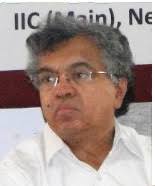
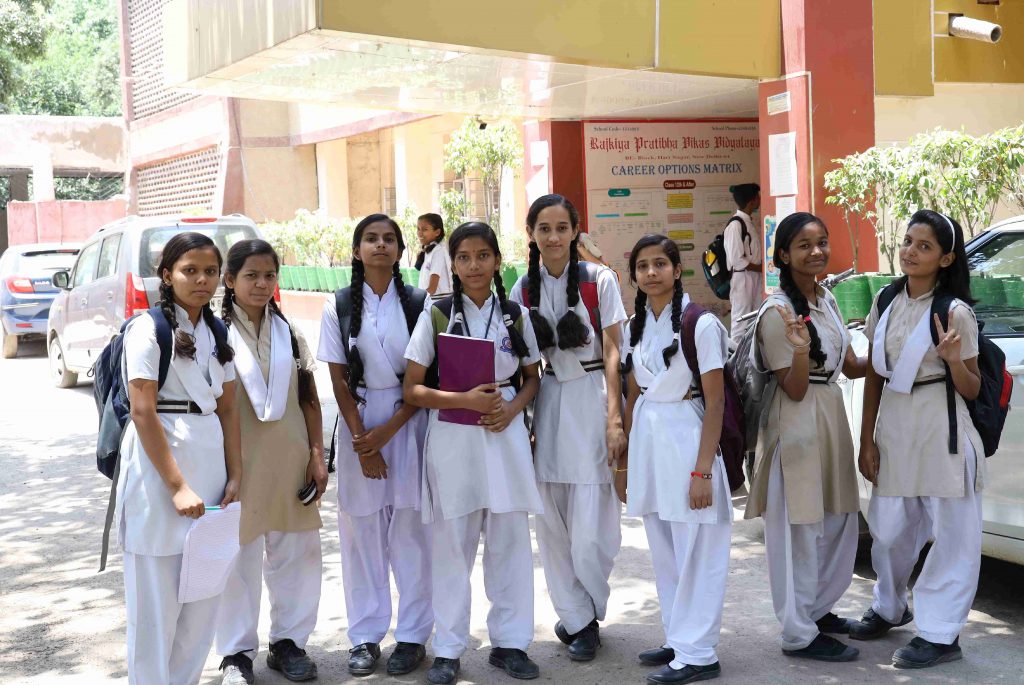
Commenting upon the prospect of schooling, once conditions permit their reopening, Prof Govinda said there is a fear that gains of universal enrolment will be lost as an estimated 8-20% of children may dropout owing to poverty and displacements. “The parents may not be able to support their education as priority will be survival. It is not only the migrant workers whom we see today who will cause this effect, but a large number of middle income people will also be losing jobs and they will become job seekers in a situation where jobs themselves will become scarce,” he explained.
The digital divide has never come in sharp focus as during this lockdown and surge in online education. Raising this issue, Dr. Annie Koshi, Principal of St. Mary’s School Delhi and education activist emphasized the need to realize that almost half of India’s children can’t be reached out online for education. “What we know is that 40% of mobile phones don’t have wifi or high speed connectivity and another 10% don’t have access to mobile phones or smart phones. Then there are special needs child population, who just can’t use or feel like using devices,” she said.
Saying that online education is not a solution, Prof Govinda said that let nobody be under illusion of learning by technology as is made out. “The actual learning happens through socialization and so far schools have been its medium. Think not to get seduced by technology platforms. The online can be best a stopgap arrangement. The technology companies are pushing it to just to make money,” he said while explaining that there is going to be a push for centralized teaching and outsourcing as government will cite lack of money even as teacher recruitment process will become tardy and add to teacher shortages.
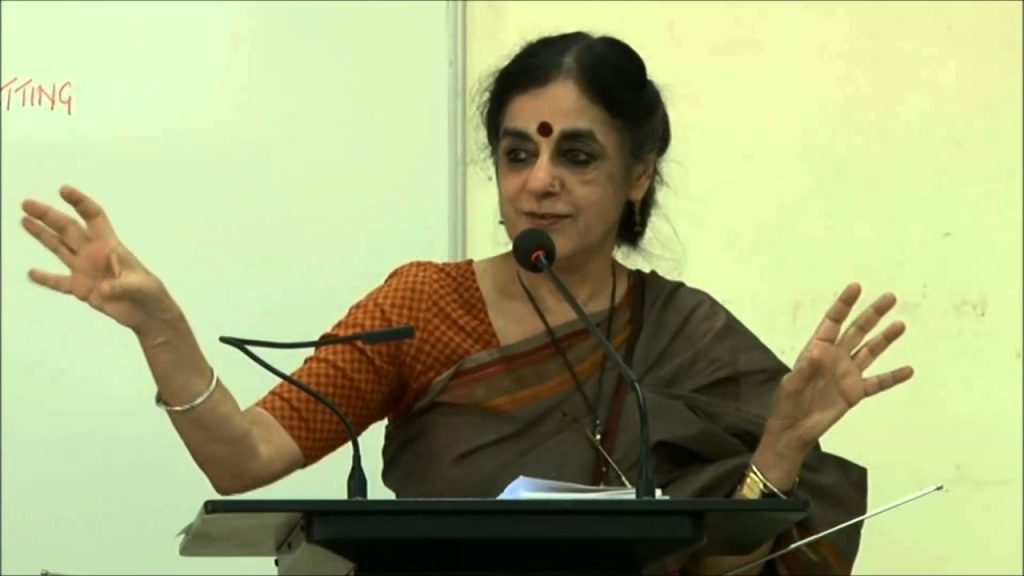
Taking the discussion further Prof Anita Rampal while citing the appearance of several top executives of online education players on all major TV channels in past a few weeks a bid to consolidate this thinking and globalization of different kind where these big players are eyeing large number of customers. While referring to Delhi government’s decision to shift online quickly in wake of lockdown, Prof Rampal said that even though the attendance to these online classes was around 20%, education minister ordered Maths classes from Khan Academy as if his own Maths teachers were incompetent to deliver. “When NCERT wrote Mathematics textbooks, elements of social justice were carefully inserted in it so that learners know about their society while learning mathematics, but what Khan Academy has done is, it has removed all contexts in their videos. These are the kind of dangers with brazen privatization that will only increase in coming time,” she added.
Prof Rampal also talked about the adaptive assessments using algorithm as regressive. “Customized education is dangerous and have a lot of limitations, we must understand,” she said.
Experts also said that crisis of this nature promote segregation and discrimination of all types and while referring to education of girl child, they said that the girls in lockdown will be preferred in household chores and it will be challenge to keep their education going. They also talked about children developing certain kind of attitudes and therefore there is a need of empathy to be taught to them. The teachers too after the schools open, will need to be much more cooperative and empathetic to parents.
Talking about way forward, the experts said that while there is a need to find and develop alternatives, solutions must be localized and uniform norms and one=size fits all must be desisted. “This is long term challenge as is a weaker economy,” said Prof Govinda, while as Prof Rampal felt lack of real data at district level is an impediment for policy making at that level. “It is ironical that some states have even outsourced policy making to firms like Boston Consulting, which is getting paid to close our schools$?,” she said sarcastically. The panel said that the movement for ensuring education as a right to children must keep the debate going to ensure right decisions in coming months.