

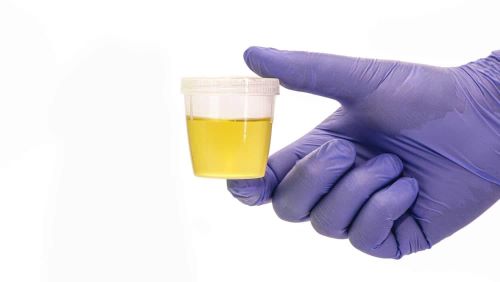
Bacterial communities in soil are as resilient to human urine as synthetic fertilisers – making recycling the bodily fluid as a fertiliser for agricultural crops a viable proposition, according to a new study.
Scientists discovered that, even when applied in high doses, one-year stored urine had little impact on soil bacterial communities and produced minimal change in soil pH and salinity.
However, the researchers did discover that urine fertilization increased the relative amounts of nitrifying and denitrifying groups compared to synthetic fertiliser – implying that more nitrogen oxides could be emitted when fertilising with urine.
Publishing their findings in Applied Soil Ecology, the team of researchers from University of Birmingham and L’Institut Agro Montpellier, France, call for further studies on the long-term effects of urine fertilisation – particularly regarding nitrogen oxide production and soil salinity.
Co-author Manon Rumeau, from the University of Birmingham, commented: “Our research highlights the potential of recycling human urine to enhance agricultural sustainability, reduce wastewater pollution, and decrease reliance on synthetic fertilisers. Stored urine can be safely applied to a plant-soil system without negatively impacting the soil microbiome.”
Fresh urine is composed of 95 % water with the remaining 5% made up of amino compounds, such as urea or creatinine, organic anions and inorganic salts making it a source of bioavailable nutrients and micronutrients for plant growth.
There has been great interest in re-using human urine as a crop fertiliser, but – until the publication of this study – more understanding was required on how urine can affect soil functions and microbial communities.
Scientists fertilised a spinach crop with two different doses of a source-separated and stored human urine –comparing these with a synthetic fertiliser treatment and a water treatment without fertilisation, conducted across four soil tanks in greenhouse conditions.
After 12 months of storage, urine had a depleted microbiome but contained few common strains of urine. Thud storing urine for several months, with the resulting increase in its pH value (about 9 rather than 6.5 for fresh urine) and its free ammonia concentration is considered sufficient to inactivate most human pathogenic bacteria and break down extracellular DNA. Soil bacterial communities were resistant to urine fertilization with only 3% of groups of organisms impacted. The urine’s high salt concentration had little discernible effect on the bacterial community.